
‘Fire season’ stretching longer, year-round preparedness needed
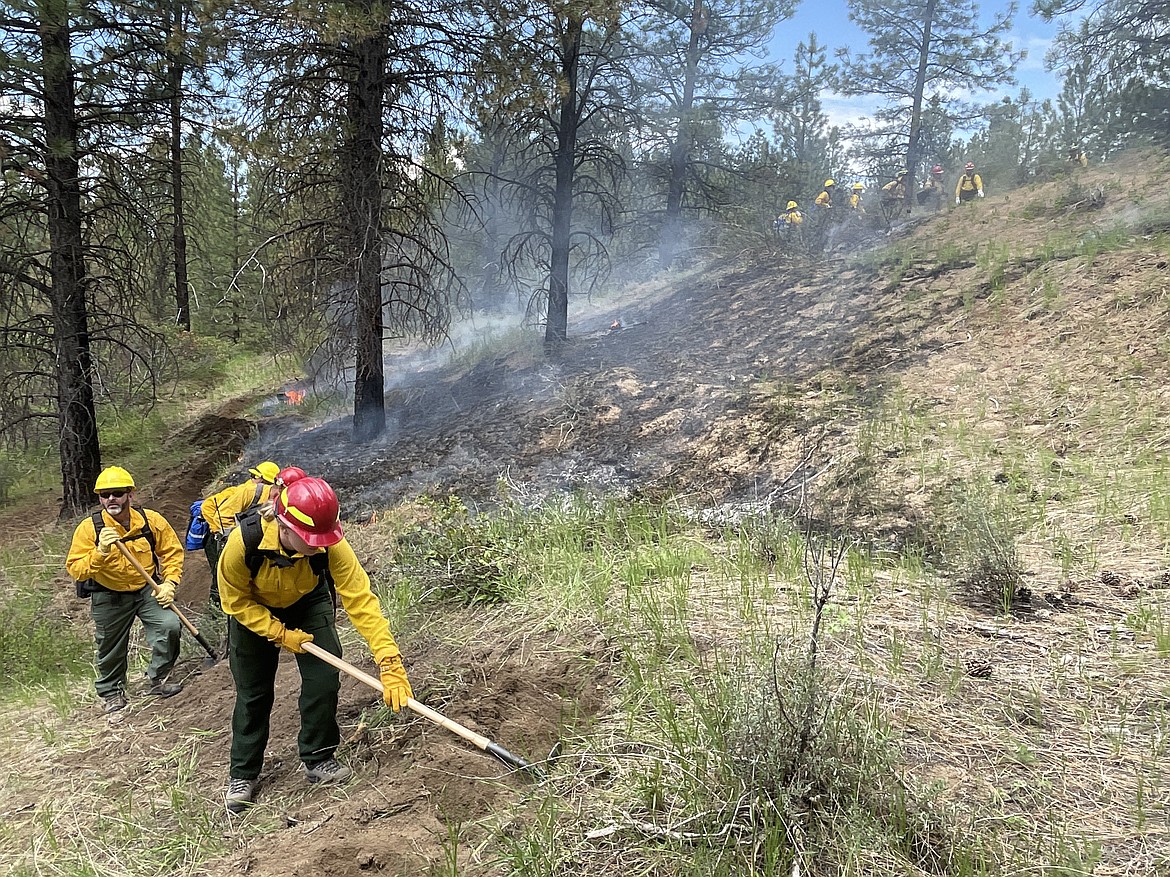
Forces from the U.S. Forest Service, Idaho Department of Lands and multiple volunteer fire departments work on containing a fire near Idaho City.
Courtesy photo
The U.S. Department of Agriculture has shifted Forest Service wildland fire forces from focusing on a model where there were five seasons in a year: winter, spring, summer, fall and fire season.
Instead, the new model is more of a fire year.
Kary G. Maddox handles the fire public affairs for the Forest Service in the Idaho Panhandle and said that firefighters are called on year-round to support national and international disaster response efforts and so the national response has been to transition to a broader model as climate change has impacted the weather and environmental conditions that lead to wildland fires.
“Across the western U.S., wildfire activity is starting earlier in the spring and lasting longer into the fall; above-normal fire activity periods typically last 75 days longer than 40 years ago,” Maddox said.
There is also a long-standing tradition of interagency fire response that is built on mutual aid from different U.S. departments that share resources and support as needed across the country.
Last year, the Forest Service initiated a 10-year strategy to continue to target wildfire crises points, where they have the potential to cause the most harm to communities.
The Idaho Panhandle National Forests have increased the number of positions in recent years to meet this need as part of the National Wildfire Crisis Strategy. Forest Service fire and aviation management workforce has currently filled 91.25% of their staff size, which is good news as we head into August.
“Our current fire danger rating across the Idaho Panhandle National Forests is high, with temperatures and fuel moisture levels weeks ahead of normal, leading to what is already a fairly active fire season in the Idaho panhandle,” Maddox said.