

THE CHEAP SEATS with STEVE CAMERON: Established coaches, and the new rules of their games
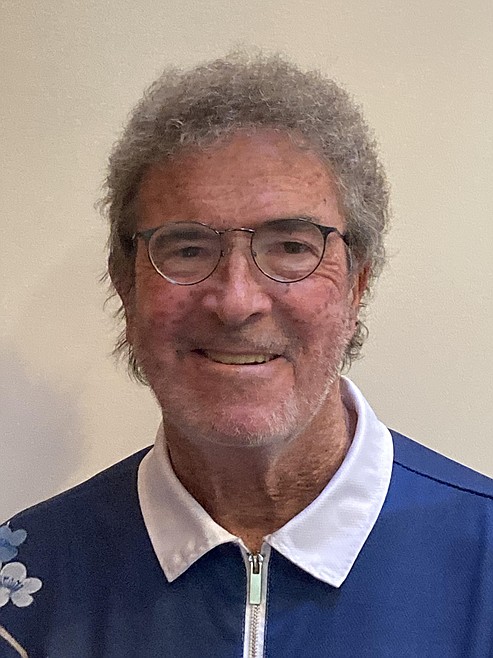
Steve Cameron
Who am I to advise a couple of legendary coaches?
Just a guy who’s been around these games for a million years.
What am I selling?
Nothing but common sense.
In truth, I suspect that Gonzaga hoop guru Mark Few and football Hall of Famer Pete Carroll already are thinking quietly about the very notions that we’re going to discuss today.
Since neither coach has been done anything dramatic to change the status quo (at least not yet), maybe it’s time to toss out some thoughts and see what we’ve got.
Why?
Well, the perennially successful Zags and Seahawks are each in danger of getting burned as their respective sports zoom rapidly into completely new worlds.
Few and Carroll are stubborn winners who believe that the revolutionary changes we’re beginning to see will come around to them — and that continued success will prove them correct.
After all, they’ve been right far more often than not, and no matter what “modern” trends they need to navigate, Few and Carroll believe that plenty of younger, data- and fad-driven opponents eventually will be shaking their hands with congratulations.
Just like always.
AS IT happens, both these coaches suffered defeats over the weekend.
There were things to be learned in both games — and in both sports, matter of fact.
Few’s Zags were upset 78-73 by Washington in Seattle, a loss that could cost them a high enough seeding to open the NCAA tournament right in Spokane next spring.
Gonzaga (then 7-1) was ranked No. 7 nationally when it made the trip across the state — and didn’t figure to be in any serious danger.
The Zags had won 16 straight against teams from the disbanding Pac-12, and hadn’t lost to U-Dub since 2005.
Predictably, Few’s gang got off to a good start, found an early rhythm and led 48-42 at halftime.
That advantage ballooned to 11 points early in the second half, and it looked like business as usual.
The Huskies and their fans, though, were bursting with energy — and even though UW wasn’t particularly efficient, relentless defense and rebounding eventually wore down the Zags.
Few traditionally has not used more than seven players (sometimes eight in a pinch) as part of his regular rotation, and he wants the starters on the court as many minutes as possible.
This time he paid the price.
Guards Ryan Nembhard and Nolan Hickman played all 40 minutes, and so did senior forward Anton Watson.
Freshman guard Luka Krajnovic never got on the court, sharpshooting redshirt freshman Braden Huff — useful inside and out at 6-11, and averaging 11 points per game (48 percent on 3-pointers) — played less than five minutes.
Eventually, the weary Zags caved in, missing all nine 3-point tries in the second half, almost a replay of their other loss to Purdue (0-for-16 behind the arc in the second half).
Few has talent on the bench, the two already mentioned, junior Ben Gregg and physically gifted Korean import Jun Seok Yeo.
Unlike so many coaches throwing depth at you these days, though, Few would rather stick with his starters.
Now that it’s cost him twice already this season, however, Few might be thinking of a new approach.
Besides not getting help from his young players in tough games, his longtime routine might well be painful in this new era of NIL and the transfer portal.
If talented players don’t get playing time, they’ll transfer.
Gonzaga lost regular rotation guard Hunter Sallis (a five-star recruit) to Wake Forest this year, along with 7-footer Efton Reid III.
Perhaps Few will adapt and change both short- and long-term plans, which might help avoid needless losses like that flop at Washington.
We’ll see.
MEANTIME, the Seahawks lost 28-16 to the 49ers on Sunday — a predictable result as talent-rich San Francisco has established itself as a solid contender for the Super Bowl.
The defeat was Seattle’s fourth straight, the first time that’s happened in the Carroll era, which spans 14 seasons.
Perhaps there was also a useful lesson for the future in this loss, though.
With Geno Smith, his No. 1 quarterback of past two years, missing with a groin injury, Carroll was forced to use QB2 Drew Lock — the “other” piece who came from Denver in the Russell Wilson trade.
Lock looked good.
Well, he was as successful as it’s reasonable possible to be against a 49er defense that held Smith and the Hawks without an offensive touchdown in a 31-13 rout on Thanksgiving.
This time around, Lock completed 22 of 31 passes for 269 yards and two touchdowns — the first on a magnificent 31-yard strike to DK Metcalf.
Carroll naturally isn’t going to come right out and say that Lock looks better for the future than Smith, but a neutral observer could see it.
The difference?
Lock is an athlete, and he bought time against the 49ers rush with good movement in the pocket and the ability to take off and run.
Smith is a sitting duck when the protection breaks down.
Look, Drew Lock might not be the Seattle QB of the future, but he has a better shot than Geno Smith.
I suspect Carroll has watched plenty of these differences in practice, but Smith knew the system from backing up Wilson, and thus won the job last year.
You could see against the 49ers, though, why so many of the NFL’s elite teams have mobile quarterbacks — Patrick Mahomes, Jalen Hurts, Josh Allen, Lamar Jackson, on and on.
The Seahawks will have to go in that direction soon.
Lock’s performance in a loss made it obvious.
Carroll might be 72, but he’s not afraid to ride the newest (and most effective) wave whenever needed.
Over to you, Pete.
Email: [email protected]
Steve Cameron’s “Cheap Seats” columns appear in The Press four times each week, normally Tuesday through Friday unless, you know, stuff happens.
Steve suggests you take his opinions in the spirit of a Jimmy Buffett song: “Breathe In, Breathe Out, Move On.”