

A little break in the weather
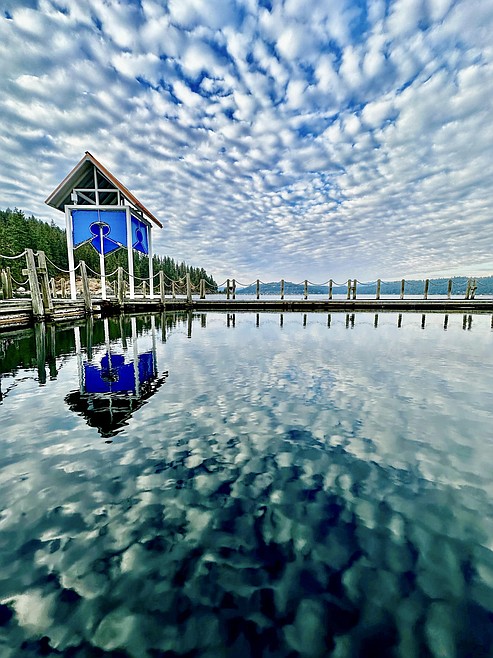
This mackerel sky was captured early Wednesday morning above Lake Coeur d'Alene.
Photo by DAVID KILMER
The rain was welcome Wednesday while North Idaho received a little break from sweltering summer heat as temperatures hovered in the near-chilly 70s.
A mackerel sky was observed in the early morning, illustrating the old weather rhyme, "Mackerel sky, mackerel sky, never long wet, never long dry."
"We've been under this ridge of high pressure, which brought all the really warm temperatures and dry conditions three to seven days ago," said Steve Bodnar, a meteorologist with the National Weather Service in Spokane. "That has since weakened and now we are getting fairly weak storm systems coming from the Pacific. We’ll be looking at cooler temperatures, more seasonal conditions through Friday, then we'll see a warming trend through the weekend and potentially continuing into next week."
Midweek precipitation is expected to be short-lived.
"It looks like the next seven days are going to be dry," Bodnar said.
The National Weather Service is forecasting a high near 80 today with a low of about 55 this evening. Friday is expected to be sunny and not too hot, about 83. Saturday will warm up with a high near 84 and temperatures aren't expected to approach the 90s until Sunday.
This cooler weather, even without more rain, bodes well for those combating wildfires in the region.
"Even if we don't get a lot of precipitation, just having the cooler temperatures and higher humidity really helps out the fires a lot," Bodnar said. "Seven hours of a light drizzle is better than a quarter-inch of rain in 15 minutes. It gives those fuels time to absorb the moisture."
A southwest wind of 10-14 mph is expected today, changing to a westerly of 6-11 mph into the evening, according to the National Weather Service. Southeast wind will flow at 5-10 mph Friday, switching to a southwest wind in the afternoon.
"We'll have to keep an eye on on it next week coming out of our warm-and-dry spell," Bodnar said. "There are a lot of different ways everything can happen. There is a really low confidence of what kind of wind speeds we may see, and what direction, too."
For now, North Idaho should enjoy a short reprieve from the extremes.