
Can't stop them from coming
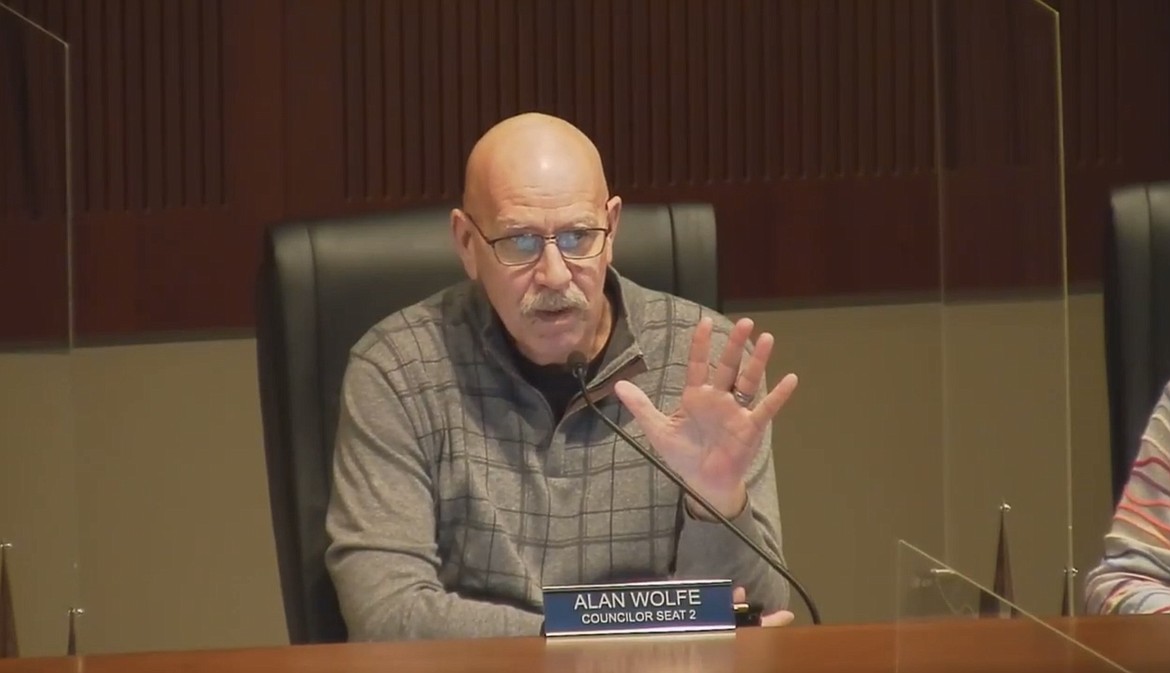
Post Falls Councilman Alan Wolfe asked if there was anything the city could do to deter more people from moving to the area, and slow the regional growth trend. Photo courtesy Post Falls Facebook Page.
Post Falls city staff and elected officials regularly field questions and concerns regarding the community's exponential growth, but what — if anything — can mitigate this issue?
Expanding out of Post Falls city limits, Kootenai County, Idaho, and even the nation are experiencing a rapid population increase. During Tuesday night's council meeting, city attorney Warren Wilson touched on the fair amount of concern this has aroused in residents.
In a comment attached to the meeting agenda, Wilson referenced two news reports indicating last year, the median residential property values across the country have increased by 14%. In the same time period, Kootenai County's values jumped 33%.
"There's just not enough housing," Warren said. "It's actually been an issue that's been ongoing for some time. It's just being exacerbated now."
The pressure this has put on existing and new residents have led to them asking the city if they could adopt an ordinance that would either stop growth completely, Wilson said, or limit the number of permits issued by the city annually. One option a man proposed to Wilson was a growth moratorium similar to that adopted in Boulder City, Nevada, that limited the number of building permits per year.
"Idaho, unlike some states, is what's called a "Dillon's Rule" state, which means that we on the local level don't have any inherent authority to regulate unless that authority has been delegated from the state either in the state constitution or in state law," Wilson said.
When it comes to a moratorium, there are two statutes under the Local Land Use Planning Act that allow cities to enforce them, Wilson said. The LLUPA grants cities and counties the authority to adopt a 182-day growth ordinance if the city council finds there is an "imminent peril to the public health, safety, and welfare." Moratoriums can be extended up to a year if the city intends to alter codes and comprehensive plans to fix the problem.
Another issue that could arise by limiting permits, Wilson noted, stems from the LLUPA's uniformity requirement.
"Essentially, all permits for the same type of use within the same zoning district have to be treated the same," he said. "A growth cap makes that really difficult because you're going to treat, let's call it, 25 as your cap, the first 25 one way, and that 26 permits are treated in a completely different fashion."
In his legal opinion, Wilson felt a growth cap does not "ultimately pass muster," he said he had heard rumblings that citizens might push for a moratorium initiative. Even if that measure could potentially violate the law and Idaho constitutional provisions, the city would have to wait until after the public votes on it, Wilson said.
Councilman Steve Anthony, who worked for Coeur d'Alene city, recalled in the 1980s when the city put in place a moratorium because the wastewater treatment plant had reached its capacity. Ultimately he said voters passed a bond levy to help finance an expansion of the facility to allow growth in the city. While this worked for Coeur d'Alene, there are no present emergencies that would validate such a rule, Wilson said. Furthermore, the difference a moratorium would make in Post Falls would be substantially less than one countywide.
"If we can't put the brakes on, we can't deter them from coming. Is this something that we have to look forward to for the next 10, 15 years?" Councilman Alan Wolfe asked. "Do we see some lull in all this coming?"
In Wilson's crystal ball, he said he doesn't see much change in the near future. Looking to the Seattle, Portland, and California areas, more people are leaving overcrowded areas for Idaho's quality of life.
"A lot of people I've met, their job is in Seattle, but they're working out of their apartment in Coeur d'Alene. They don't have to live there anymore," Anthony said. "Through zoom meetings, we found that companies are saving money. They can put people in areas that they can afford."
However, he did note that with the mounting housing crisis Kootenai County is experiencing at a certain point, people are going to look for the "next best thing" once local prices reach the level of the out-of-state cities people were escaping from. Councilman Joe Malloy noted that there isn't much they can do to discourage growth, but one power they have as a city could be to approve fewer land annexations — which the board recently did along Highway 41 because of crowding.
"People want us to slow it, people want us to stop it, and people want us to implement actions that were taken in other states that are not legal in Idaho," Mayor Ron Jacobson said. "I think we need to be cognizant of that."