MOMENTS, MEMORIES AND MADNESS with STEVE CAMERON: Mariners’ rebuild reminiscent of Royals’ rise in 2014, ’15
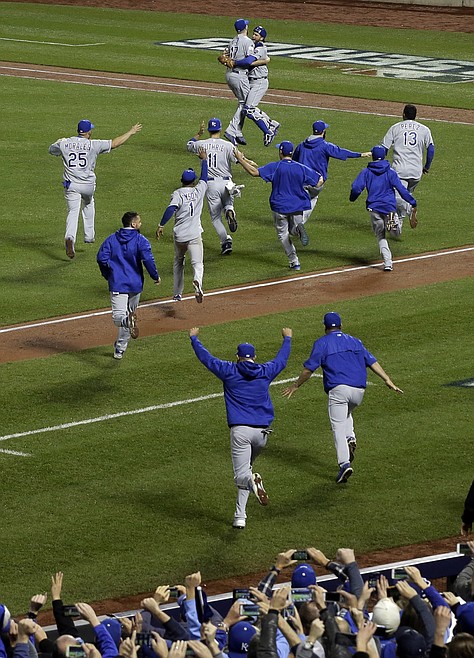
JULIE JACOBSON/Associated Press The Kansas City Royals won the 2015 World Series, completing a rebuild much like the Seattle Mariners are attempting these days.
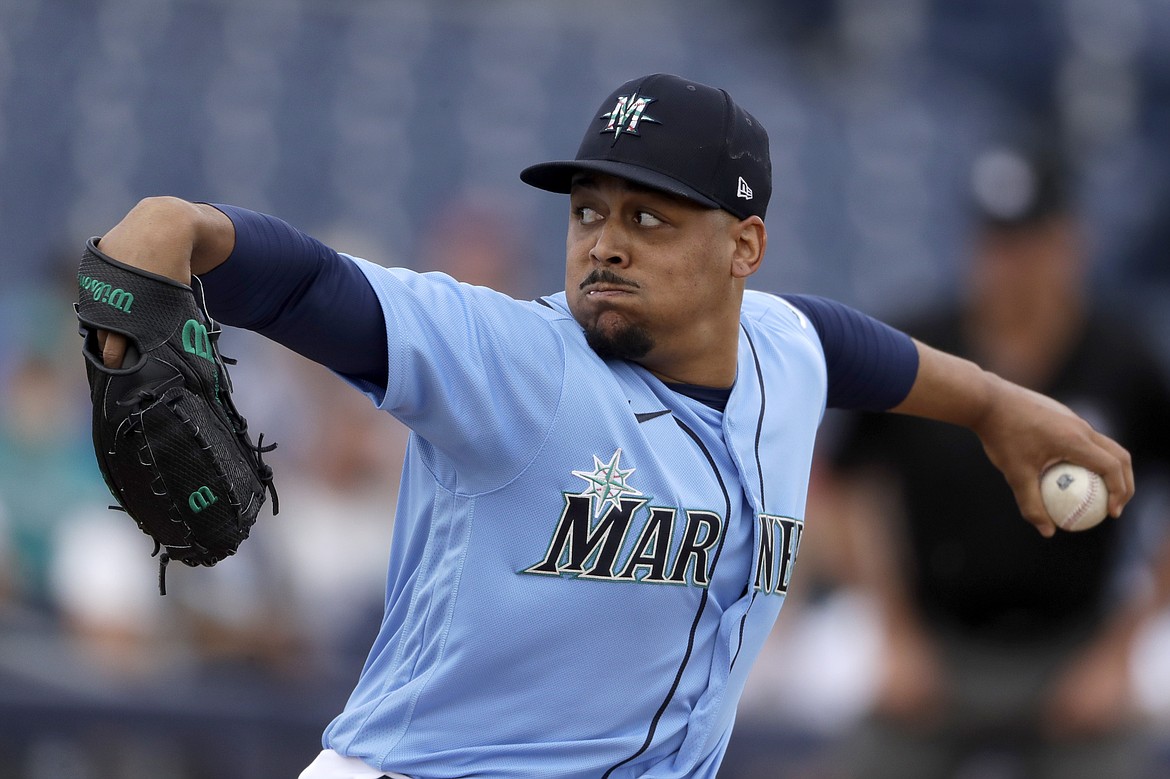
CHARLIE RIEDEL/Associated Press Starting pitcher Justus Sheffield is one of many young players the Seattle Mariners are counting on in their “rebuild.”
The Mariners should be opening the 2020 season on Thursday.
They won’t, of course.
Exactly when (or if) MLB might kick into gear this summer remains a great unknown.
It’s just one more kick in the teeth for beleaguered M’s fans, who haven’t had a rooting interest in postseason baseball since 2001.
Seattle wasn’t likely to sniff the playoffs this year, either, but there’s been hope we finally might see some serious evidence that GM Jerry Dipoto’s “tear it down to build something better” plan is beginning to bear fruit.
Several of the young players whom the Mariners hope will form the cornerstone of a solid, routinely competitive team would have been on the 25-man roster that was scheduled to open the season in Texas — quite a few in the starting lineup (first baseman Evan White, outfielders Kyle Lewis and Jake Fraley, second baseman Shed Long and shortstop J.P, Crawford, almost certainly).
Then if the full season had gone to plan, yet another wave of these talented kids would be in the major leagues — starting pitchers Justin Dunn and Logan Gilbert, relievers Joey Gerber and Sam Delaplane, maybe even 20-year-old outfielder Jarred Kelenic.
And there are more coming, like 19-year-old powerhouse Julio Rodriguez, who looks like he simply needs at-bats against better and better pitching before he begins seriously bashing in Seattle.
AT THE moment, we don’t have a clue when baseball might resume in earnest.
That’s down, pretty much, to how prudently we all behave in the fight against a virus that you can’t even see without a microscope.
The fate of the Mariners pales in comparison to what’s happening in the world at large — and yet, sports and our participation as viewers (particularly in person) has a lot to do with the country’s general psyche.
So there’s nothing at all wrong with hoping that when baseball does resume, Dipoto’s slightly fascinating reconstruction produces a solid ballclub that can win for the long term.
Wouldn’t that be fun?
Since this is a “memories column” and M’s fans can always use a serious shot of hope, I thought this week would be a good time to share the nuts and bolts of a story I saw up close — the evolution of the Kansas City Royals, a team that went from American League bottom-feeder to competing in back-to-back World Series.
I also thought we could compare how Dayton Moore, the Royals general manager, put together that team that came so close to winning the Series in 2014, and then finished the job by putting away the Mets in five games a year later.
THERE ARE some obvious comparisons with how Seattle is going about the task of becoming relevant.
You have some excellent draft picks and international signings as the benefit of being a punching bag in certain years, though perhaps not as many as you’d suspect.
And the fallout from having a star or two on a non-playoff team is that you can always pull the trigger and ship out an excellent player or two (or more) and get back young, talented, but unproven kids that aren’t going to be everyday contributors on a team trying to reach the World Series.
Let’s start with this comparison…
Kansas City drafted high school pitcher Zack Greinke in 2002, and found itself with a phenomenally gifted kid who had electric stuff but suffered from social anxiety problems.
The Royals got help for Greinke, nursed him back into the rotation and were rewarded when he won a Cy Young Award in 2009, winning just 16 games on a poor team, but posting a 2.16 ERA.
The Royals needed help at multiple spots if they were going to contend, though, so prior to the 2011 season, they traded Greinke and shortstop Yuniesky Betancourt (overrated player, poor attitude) to an ambitious Milwaukee outfit for shortstop Alcides Escobar, outfielder Lorenzo Cain, reliever Jeremy Jeffress and young starter Jake Odorizzi.
Escobar and Cain became regulars who were on the field to throw their gloves in the air when the Royals won the World Series.
Personally, I thought Cain could be considered the Royals’ catalyst, as he seemed to be in the middle of every postseason rally for two years.
Moore then turned around and made Odorizzi one of the key pieces in a trade with Tampa Bay that netted starter James Shields and under-the-radar teammate Wade Davis.
Shields never quite lived up to his role as a No. 1 starter, but he was a terrific mentor to the Royals’ young pitchers.
Davis, who was acquired to be perhaps a No. 4 or No. 5 starter, flipped roles and became the best reliever in baseball — and the man who threw the final pitch (a called strike) to end the 2015 World Series.
NOW LET’S look at a similar move by Dipoto.
Seattle drafted big lefty James Paxton in 2010, and in six seasons with the Mariners, he was consistently good — and consistently hurt.
Paxton only started 102 games for the M’s, and 29 of those came in 2018, the year he was about to turn 30.
So Dipoto moved him on to the Yankees for three prospects — with left-hander Justus Sheffield the real blue-chipper. Sheffield will be in the rotation whenever MLB can start play again.
Reliever Erik Swanson and outfielder Dom Thompson-Williams also came in that deal. Swanson still could be good in Seattle — he has the tools — but Thompson-Williams so far has been disappointing in the minors.
It happens…and you never give up on kids too soon.
On Dec. 3, 2018, Dipoto’s executed his most spectacular move, somehow getting the Mets to take Robbie Cano and Edwin Diaz (off his one blockbuster season) in return for Kelenic and Dunn.
The M’s also got Gerson Bautista, the hard-throwing reliever who figures in future plans, reliever Anthony Swarzak and veteran outfielder Jay Bruce.
Although Bruce wasn’t going to be around for future parades (hopefully), he proved to be a fantastic teammate and teacher during his single part-season in Seattle.
That trade essentially filled out the dance card, since Dipoto already had acquired Crawford (obtained from the Phillies for 30-year-old shortstop Jean Segura, a decent player who was not considered a good clubhouse influence), a potential starting second baseman in Long, and Fraley in the outfield.
Kelenic hammered his way through three minor league levels a year ago and is ranked prospect No. 7 in MLB on the list compiled by Baseball Prospectus.
ONE THING became obvious in the years I watched the Royals turn into champions.
Over roughly a five-year period, a core group was established in Kansas City, and this became the heartbeat of the Royals.
It doesn’t seem to matter if the players are your own signings (Alex Gordon, Eric Hosmer, Mike Moustakas, Salvador Perez) or if they arrive at the club young and basically ready to join the culture (Cain and Escobar).
Seattle needs to match that kind of nucleus.
The M’s clearly feel that starter Marco Gonzales, Sheffield, Dunn, Gilbert, Crawford, White, Kelenic, Rodriguez and perhaps Lewis and/or Fraley can form that sort of cohesion.
You can tell the Mariners are thinking about that team-bonding dynamic, since they left some prospects at Double-A Arkansas last year because the club was winning.
Just as the Royals did with several of their key young players, the M’s obviously wanted their prospects to get the sense of being successful together.
Whenever baseball comes back to us, the young and growing Mariners will be intriguing — maybe even exciting — as we watch them develop.
A lot of fans doubted the way things were starting to fall together in Kansas City where, like Seattle, success was in the distant past.
But I’ve seen this movie.
It had a happy ending the first time around.
Email: [email protected]
Steve Cameron’s “Cheap Seats” columns for The Press appear on Monday, Wednesday and Friday. He also contributes the “Zags Tracker” package on Gonzaga basketball each Tuesday.
Steve’s various tales from several decades in sports — “Moments, Memories and Madness” — run on Sundays.