
Smart thrills populate 'Invisible Man' remake








By TYLER WILSON/Coeur Voice contributor
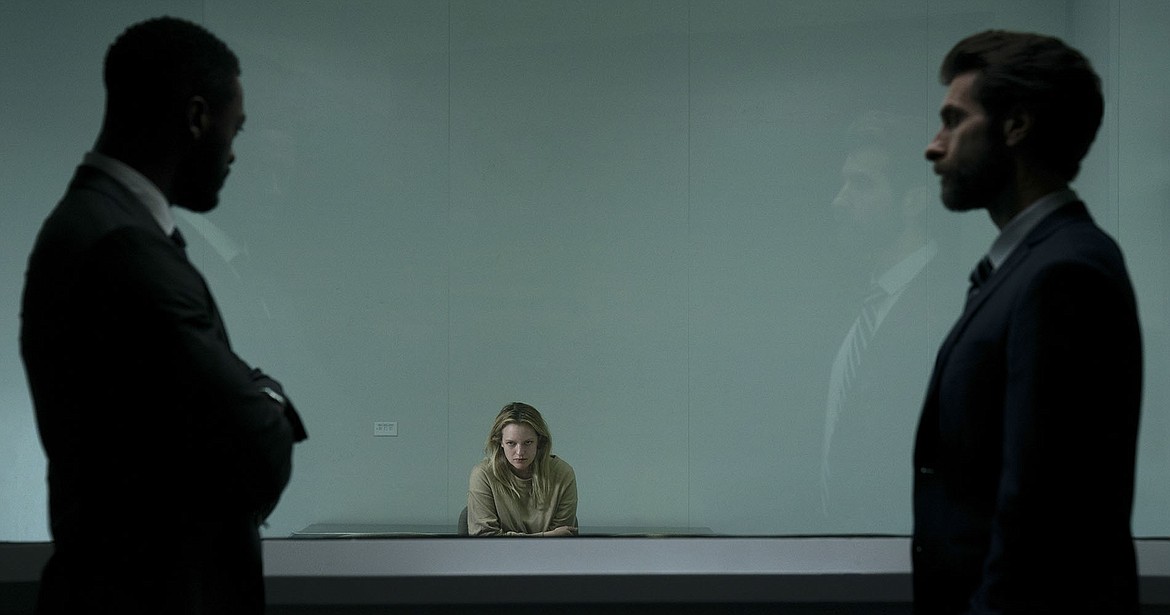
The new “Invisible Man” spends little time on setup. By the 20 minute mark, there’s no question about what’s happening to Cecilia, (Elisabeth Moss), a woman trying to evade a possessive and dangerous ex-boyfriend. Other characters in the movie don’t believe her, but we the audience know immediately she’s being terrorized by an actual invisible man.
“Invisible Man” opens with a suspenseful escape. Cecelia drugs her abusive boyfriend (he happens to be a world-renowned “optics scientist”) and flees his isolated compound, though not without a few hiccups.
Cecilia hides out a friend’s house and, crippled by post-traumatic stress, struggles to even walk outside to the mailbox. Two weeks later, she hears that the boyfriend died of an apparent suicide. Psssht. Right. The boyfriend has definitely faked his death, managed to become invisible and begins terrorizing Cecilia around the house. It escalates more when the man begins to frame Cecilia with disturbing, violent acts.
Leigh Whannell (director of the delightfully bonkers sci-fi thriller “Upgrade” from 2018) ratchets tension throughout the film with minimal use of jump scares. The invisible man rarely leaves Cecilia’s presence, even when others are around, making her emotional unraveling all the more compelling. Even with the terror beginning early, Whannell manages to consistently escalate the confrontations without resorting to goofy sight gags (only a couple “floating” butcher knives here).
Moss, a standout on “Mad Men” and one of the biggest Oscar snubs of last year for “Her Smell,” where she played a punk singer/recovering addict, delivers another propulsive and sympathetic performance here. While she’s a victim of debilitating physical and emotional abuse, the movie’s opening act establishes Cecilia as a person unwilling to fall back into her abuser’s “gaslighting,” and the movie never once undermines the character’s point-of-view.
In between the suspense sequences, “Invisible Man” deftly dramatizes patterns of dismissal and victim-blaming by focusing on how other characters in Cecilia’s life react to her claims of an invisible predator. It raises the issues without breaking outside the logic of the narrative, and, at a certain point, the movie allows the supporting characters to embrace the actual reality. At a certain point, even this Invisible Man stops hiding.
Much like “Upgrade,” Whannell’s “Invisible Man” is polished with impressive production design and technical verve despite a tiny budget. The only major glitch of the film involves the inconsistent whereabouts of the film’s villain - he manages to pop into places too conveniently at times, or he’s able to traverse long distances in half the time as Cecilia. To be fair, the movie at least attempts to address these leaps in logic near the end, though perhaps not as well as it intends.
An “Invisible Man” remake was originally going to happen as part of Universal’s big budget Dark Universe concept that began (and ended) with the awful Tom Cruise remake of “The Mummy.” This smaller, more-intimate take on “The Invisible Man’ proves that recycling old ideas can be a good thing when coupled with talent and fresh perspective.
- • •
Tyler Wilson can be reached at [email protected]. He’s been writing professionally about movies since 2000 and is the co-host of Old Millennials Remember Movies, available everywhere you get podcasts and at OldMillennialsRemember.com.