
Sewage costs runneth over
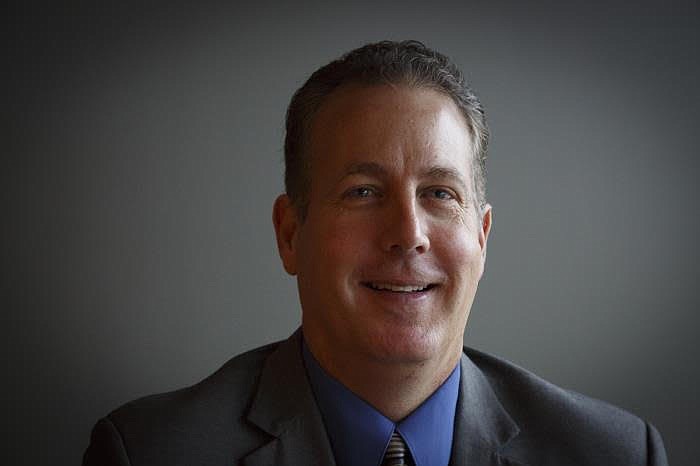
Troy Tymesen
By CRAIG NORTHRUP
Staff Writer
The city of Coeur d’Alene is seeing light at the end of the tunnel.
Or in this case, at the end of the sewage pipe.
The city’s Public Works Committee voted Monday to recommend what it expects to be the final drop in the Hubbard Avenue wastewater treatment facility’s financial bucket, stamping their approval on additional dollars to wrap up unexpected expenditures over the past three years.
“We are so close to the finish line, I can taste it,” Mike Becker, the Wastewater Department’s capital program manager, told the committee. “Not that I’d want to taste things out of the treatment plant.”
The final drop in the bucket is hardly a drop: Becker asked the committee to recommend an additional $971,404.59 to the project. After last October’s request for an extra $534,930, the final bill — assuming no other issues arise — brings the price tag to $17,675,334.59, roughly $1.5 million more than what was originally approved in 2017.
The extra funding pays off unanticipated expenses since the project began more than two years ago. In his report to the committee, Becker cited several examples he said couldn’t be anticipated when Apollo Construction began digging, including the need to suspend pipes in mid-air while crews worked to complete the project, re-routing pipes and wear-and-tear due in no small part to corrosive material running through the system every day.
“This treatment center, while it is state-of-the-art, deals with very caustic materials,” he said.
Just as significant as its state-of-the-art quality, its sheer increase in capacity is what will make the cost worthwhile, Becker said. The facility’s volume capabilities have jumped by 500 percent, now capable of supporting 5 million gallons per day.
The project is funded by an SRF loan, one of the few loans on the city’s books. The city will make payments starting next year.
“There are a lot of pipes, a lot of motors, a lot of working parts down there,” City Administrator Troy Tymesen said before the committee meeting. “This wastewater thing is a tough business. Those materials they’re using — it chews up metal like nobody’s business … But to have just under a 6 percent changeover on a $16 million project, that’s a no-brainer. That’s a bargain … And this fund was created with a little bit of a contingency. I know $971,000 is a big number, but this was a big, big project.”
Tymesen emphasized as well that the project is all paid by user fees rather than by property taxes, and that he does not anticipate any change to the rates.
The committee took the opportunity to evaluate the finer details of the price tag before sending its recommendation to the City Council.
“I understand it is never as cheap to go back after the fact,” committee member and Councilman Dan English said. “So if I bought an easy-lift tailgate for the back of my truck, it’d be about $200, where if I went back to add it on after the fact, it’d be about $2,000. So I know that’s to be expected.”
Fellow council and committee member Kiki Miller wanted assurances from Becker and his department that this will be the last increase in a project scheduled to wrap up in three months. Becker said he anticipates no further additional costs to the century-old facility, though it will always require maintenance and eventual repair.
“Our goal here is, when we find a solution, we try to find a permanent solution, or as permanent a solution as can be expected,” he said.
Miller also pointed to certain line items to the additional expenditures, including a sampling sink costing approximately $21,000, as examples of the need for due diligence.
“Sometimes it feels like we’re rubber-stamping a big, giant change order,” she said to Becker, “that is money you’ve already spent. So I’m wanting to make sure … Sometimes it feels like we just threw a million dollars, that we just opened the checkbook for a while and allowed people to spend what they wanted to.”
“Apollo’s done a great job,” Tymesen said. “They’ve been a great partner with the city, and they’re able to manage these unexpected costs.”
The matter now goes to the City Council, which will vote on it in October. Mayor Steve Widmyer gave his support for the final bill.
“We are coming to the close of a three-year, $16.5 million project,” he said. “During those three years of construction, unanticipated items were encountered that were more economical to fix now, rather than to come back later to be repaired.
“In the long run, this is in the best interest of our ratepayers.”