

Bring the 27th letter back
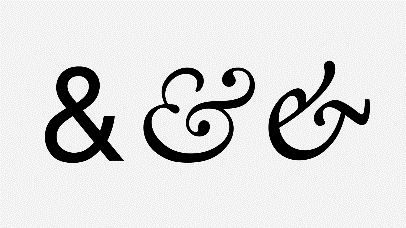
Everyone knows the English alphabet has 26 letters, right?
Wrong.
At least it wasn’t always true. We once had several more, confirmed by Oxford Dictionaries. In fact, in the 1800s schoolchildren were taught the alphabet rhyme a little differently, according to Dictionary.com. Try this ending with a little hum:
“…T U V, X Y Z and per se and.”
Yup, I mean the ampersand — “&” was once an official part of the English alphabet — allegedly as far as back as the year 45 C.E. It appeared on the first printing press in the 1400s.
It sounds dumb to say, “X Y Z and and,” so the & symbol was called “and per se.” Per se means by itself.
Over time, “and per se and” got pushed together in pronunciation, morphing into ampersand. Ta da. (Useless fact: Mrs. Language Person says when a mispronounced word becomes a real one, it’s called a mondegreen.)
The image happened the same way. Latin for “and” is et. Imagine that in cursive, with the curved E. Check this out:
OK, so this linguistic tidbit is old news. Why bring it up in 2019? Because some want it back.
As the argument goes, we do still use the ampersand. Businesses seem to love it; the & symbol looks cooler than spelling it out, especially when acronyms or initials are involved. Law and accounting firms break up lists of partners with it. We still see it in books and on keyboards, and it symbolizes an actual word. True, so do % and #, but they were never part of the alphabet.
If you’re convinced, A&W Restaurants (like the root beer) actually has an online petition you can sign.
Fellow linguaphiles may point out & isn’t the only letter to disappear from our alphabet. Among the others, the best bring-it-back candidate is the thorn — but that’s a story for another day.
My thanks to reader Owen M. for today’s topic.
•••
Sholeh Patrick is a columnist & lover of language who considers no letter nor linguistic fact surplus to requirements. Contact her at [email protected].