
Dual roles raise conflict concern
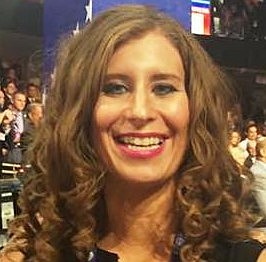


By BRIAN WALKER
Staff Writer
COEUR d'ALENE — A former longtime Kootenai County clerk is raising conflict of interest concerns because a county elections official is also chair of the Idaho Republican Party.
But Jennifer Locke, the county's acting clerk who assumed the Idaho GOP's top leadership position two weeks ago, defends her dual roles.
"Here in Idaho we elect partisan officials to administer county government for the whole electorate," Locke wrote in an email response Friday to The Press. "Statewide almost every candidate for county offices such as clerk runs either on the Constitution Party, Democratic Party, Libertarian Party or Republican Party tickets.
"Here in Kootenai County we have elected officials who run our county government fairly while maintaining positions in local parties. Criticisms of this long-standing Idaho way of government are far-fetched and baseless."
This week Locke's position at the county was elevated to acting clerk per Idaho statute while Clerk Jim Brannon recovers at Kootenai Health from a medical issue. Otherwise Locke is chief deputy clerk.
Under Idaho code, the clerk is the chief elections official in the county.
Democrat Dan English, who served as the county's clerk from 1995 to 2010 and is a current Coeur d'Alene City Council member, said many elections personnel try hard to avoid even the appearance of a conflict of interest.
"If a person is a chief deputy clerk, which is a political appointment, and also chair of the state party when you're running an elections office, I see that as a big problem," English told The Press. "Even though the process allows it, I don't think it should. I felt strongly enough about this that I didn't want to remain silent."
English said what he believes are muddy waters will need a legislative fix.
Locke, of Hayden, was the state party's first vice-chair when she assumed the top role after Jonathan Parker's resignation. She will serve in the capacity until the party's summer meeting when a new chair will be elected to complete the remainder of Parker's two-year term.
"The night I became acting chairman, I instructed GOP staff that I would conduct Idaho GOP business only outside of my working hours," she wrote to The Press. "The state party's paid staffers run its office's day-to-day operations. During this period, the focus in my capacity as acting chair is putting on a successful summer meeting where party members will elect a new chairman for the remainder of the two-year term."
The acting chairman position is a volunteer appointment.
English said there should be "guardrails" in place preventing similar circumstances in the future. That way even the appearance of a conflict of interest could be avoided.
"Even though it's the way the process works, the people in these positions make their own choices," he said, adding that he believes such situations can be avoided. "These situations have got to put unnecessary stress on the elections workers."
To avoid the perception of a conflict, English said he didn't even want to serve as a precinct committeeman when he was clerk.
English said his concern is not personality-driven. The overall series of events involving Locke — not the March 12 election — caused him to speak out.
But Locke questions the timing of the concern.
"It is regrettable that some would use Clerk Brannon's temporary health issues as a basis for a political attack," she wrote.
Tim Hurst, chief deputy at the Idaho Secretary of State's Office, said he's not aware of anything that would prevent an acting county clerk from being the chair of a state party, especially in an odd-numbered year when there are no partisan elections.
"Although the clerk oversees the election, (he or she) does not conduct it (alone)," Hurst wrote. "Each deputy clerk and (clerk) also takes an oath to follow the laws of the state, including conducting elections in a fair and impartial manner."
Hurst said he's not aware of the situation having occurred in Idaho before.