
Health advisory issued for Fernan Lake
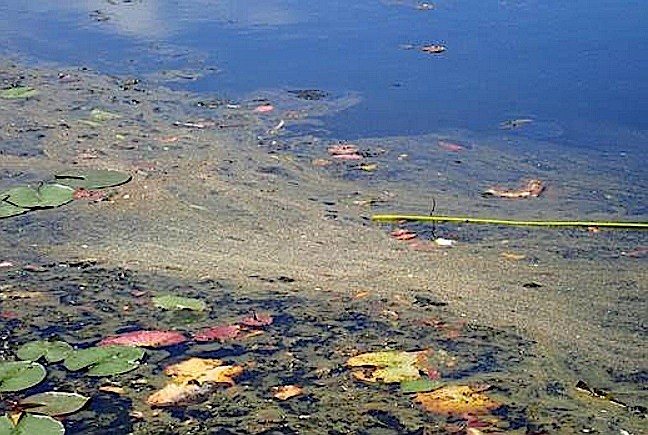
Courtesy photo Harmful algae bloom has prompted health officials to issue an advisory on Fernan Lake.
By BRIAN WALKER
Staff Writer
FERNAN LAKE — A health advisory was issued on Thursday for Fernan Lake due to a presence of harmful algae bloom.
The algae occurs almost annually on Fernan during hot temperatures, slow water flow, high nutrient levels and strong sunlight.
"We can expect a HAB every year as long as the conditions are right," Panhandle Health District spokeswoman Katherine Hoyer said.
The public is urged to use caution on the lake. Toxin exposure primarily occurs from ingesting the bacteria and the water they live in but also can occur with skin contact.
Pets, children, the elderly, and people with compromised immune systems are most at-risk of harmful exposure.
Ingesting cyanotoxins, which can remain after visible algae blooms subside, can result in skin irritation, wheezing, upset stomach and, at very high levels, death. Symptoms in humans are rare. Anyone with symptoms should seek medical attention.
Hoyer said pets presented a concern, as they tend to jump in the water and then lick their fur after getting out.
"When pets lick their fur after being in water with an algae bloom, they ingest the cyanotoxin and can become very ill," she said.
If your pet becomes ill after being in the water, call a veterinarian immediately.
If people choose to eat fish from the lake, experts recommend they remove all fat, skin and organs before cooking. Toxins are more likely to collect in those tissues.
The algae blooms can be unsightly, often presenting in discolored water, streaks or globs of scum and growing into thick green mats along lake shorelines.
"These scums should be avoided," said Kristin Larson, water quality analyst for the Idaho Department of Environmental Quality.
The dock at the east end of the lake has a scum and there are other signs of cyanotoxins across the lake.
"The wind and water conditions can cause a HAB to move, so we advise people when in doubt, stay out," Hoyer said.
Health officials said they no longer use the term blue-green algae to describe the problem as it is not accurate. The bacteria can occur in a variety of colors beyond just blue or green.
The public will be advised when the concern no longer exists. DEQ is working with residents and landowners to implement nutrient reduction projects to improve overall water quality and limit the frequency and duration of the algal blooms.
"Treating HABs is not easy, may be very expensive, and is lake-specific," said Larson, adding a University of Idaho lake scientist is involved in research to determine what methods for treatment would be feasible.