

It's a numbers game as we try to fix the Mariners
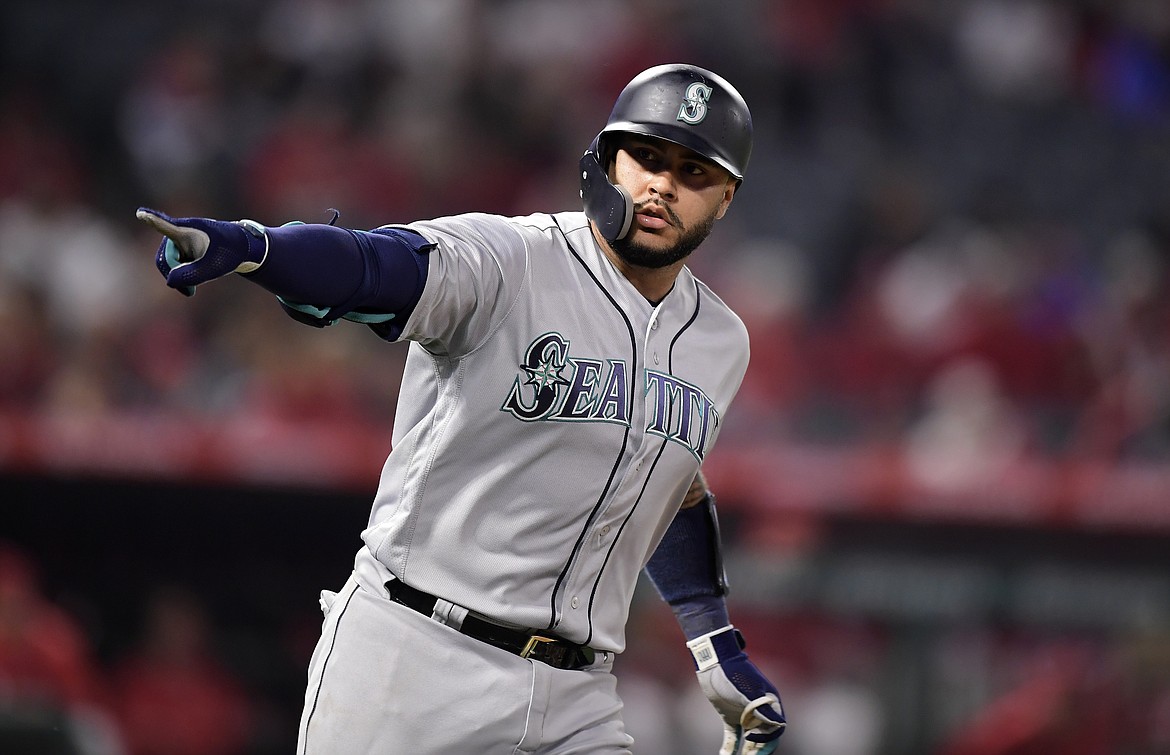

No, we haven’t forgotten our vow to fix the Mariners.
Or rather, our vow to let YOU fix the lovable M’s and make them competitive over the next few years.
I’ll help with all the information I can provide — how various minor leaguers are doing, where a trade might make sense and so on — but exactly how this team gets constructed will depend on you.
Now that we’re past the All-Star break and just a couple of weeks from the non-waiver trading deadline, it’s time to make some serious decisions about this team.
I handed you one critical question — should Seattle hang on to Domingo Santana or trade him now with the market looking good? — and received some excellent, thoughtful answers.
We’re going to discuss Santana and some other current M’s between now and the deadline.
The target date to compete in the division and onward will be 2021 (if you’re optimistic and can make a case for it), or 2022 to be safe.
Those dates are critical, because of how the minor league prospects are advancing, and how many years of financial team control the Mariners have over current players.
FOR A proper discussion on how to proceed as we take over the M’s front office, we need to be speaking the same language.
Players’ stats and prospects grading systems used to be translated through simple numbers, but the virulent spread of advanced analytics has brought so many unusual figures into the game that fans can easily get lost while trying to make comparisons.
Hell, I’ve covered a couple thousand MLB games, and some of the far-out analytic numbers leave me puzzled.
It doesn’t matter how clever your new and amazing stats might be, by the way.
If only a handful of people understand them — or if they don’t work in an overall system — then they’re a waste of time.
For our purposes, I think we’re best using some of the basic analytic numbers and comparisons — WAR (wins above replacement), OPS (on base plus slugging), etc. — to make sure we’re always on the same page.
But…
It’s also worth noting that even some everyday analytics can send you down blind alleyways.
For instance, Mariners catcher Omar Narvaez (a player who is very much on our keep-or-not cut line) is carrying a respectable WAR of 1.4.
Should we make a major decision based on that?
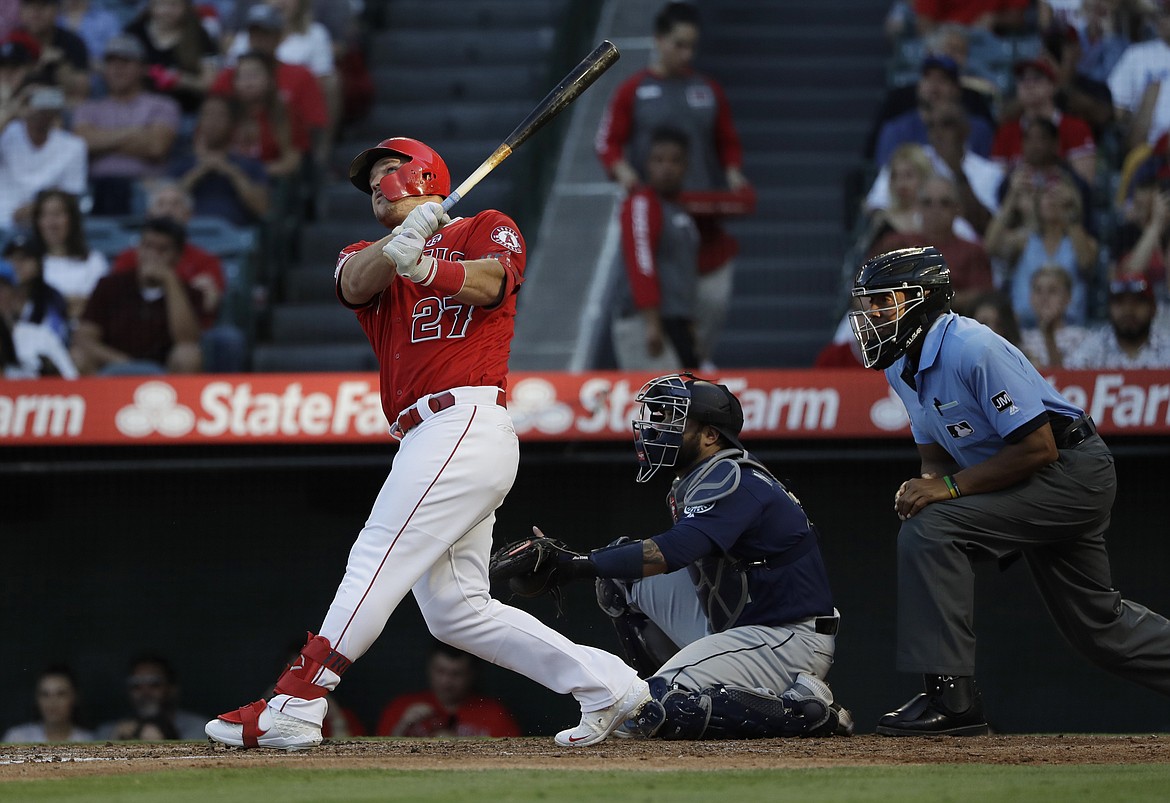
Well, Mike Trout’s current-season WAR is 6.2.
The implication here is that Trout, who is the best player in the game by many light-years, would be worth five more wins over the season than Narvaez.
With all respect to Omar, I think we can agree that Trout might get us five extra wins in a couple of weeks — let alone a whole year.
I’m sure you’re getting the picture.
We want to compare players, try to guess how they’ll perform in 2021 and beyond, what they’ll cost and so on.
As we go through the process, stats like WAR and others are worth checking, but they’ll never replace common sense.
If the Angels (for whatever insane reason) were inclined to trade us Trout, we’d offer Narvaez, Mallex Smith, Mallex’s pet puppy, the Space Needle and the entire Starbucks mocha empire.
We’ll get more than five extra wins out of this exchange, I promise.
You’d change coffee brands for that, no?
HERE’S ONE more language problem.
Depending on how deep you’ve fallen into the canyon of analytics, you might use a phrase that’s also pretty common among fans with hot dogs – but it means something different to you and your fellow geeks.
For instance, if you read a fairly involved Mariners game story in a major newspaper (like the Seattle Times), eventually you’ll come across the phrase like, “Narvaez has hit well lately, with a slash line of .279/.366/.408.”
The phrase is so common that it’s become a verb, as in “…Through June and July, Narvaez slashed .279/.366/.408.”
The issue, however, is that for quite a long time, fans and even journalists considered a slash line to include a player’s batting average, on-base percentage and, as the final number, on-base plus slugging — which theoretically presents a better overall picture of what Narvaez (or anyone else) is going to give you offensively.
Consider: Daniel Vogelbach, the M’s lone All-Star this year, currently has an “old” slash line of .240/.376/.878.
The MLB average for on-base plus slugging is roughly .750, so it’s obvious Vogelbach — with that low batting average — must draw a ton of walks (62) to go with his 21 homers and 11 doubles.
You see the problem?
Some journalists will write Vogey’s slash line as .240/.376/.502 – using that raw slugging percentage as the third number.
When we actually get down to debating who should be lining up for our club in 2021, I’ll make sure our stats line up properly — although I can tell you that I trust my own eyes more than ANY set of numbers.
But that’s a discussion for another day.
So is the debut of the robot umpire.
The game is changing, and we need players for our 2021 team who fit that change.
But we’ll be ready.
Steve Cameron’s “Cheap Seats” columns for The Press appear on Monday, Wednesday and Friday. Steve also contributes the “Zags Tracker” package on Gonzaga basketball once monthly during the offseason.
Email: [email protected]