
Young Mush Man
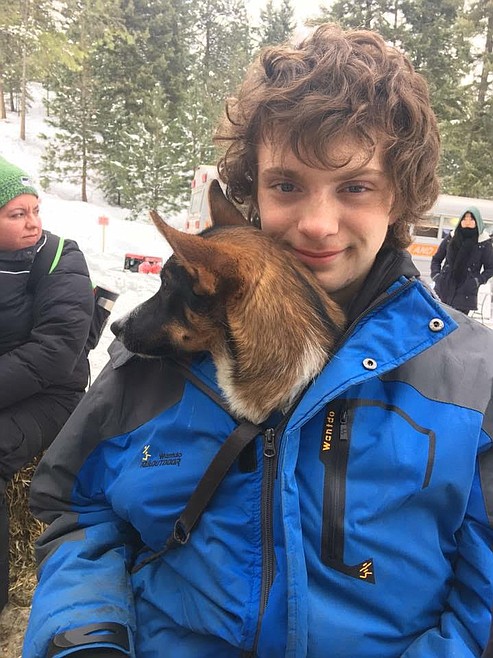
Courtesy photo Dirk Nelson enjoys a moment at the Conconully Snow Dog Super Mush last winter with an Alaskan husky pup named Snickers.
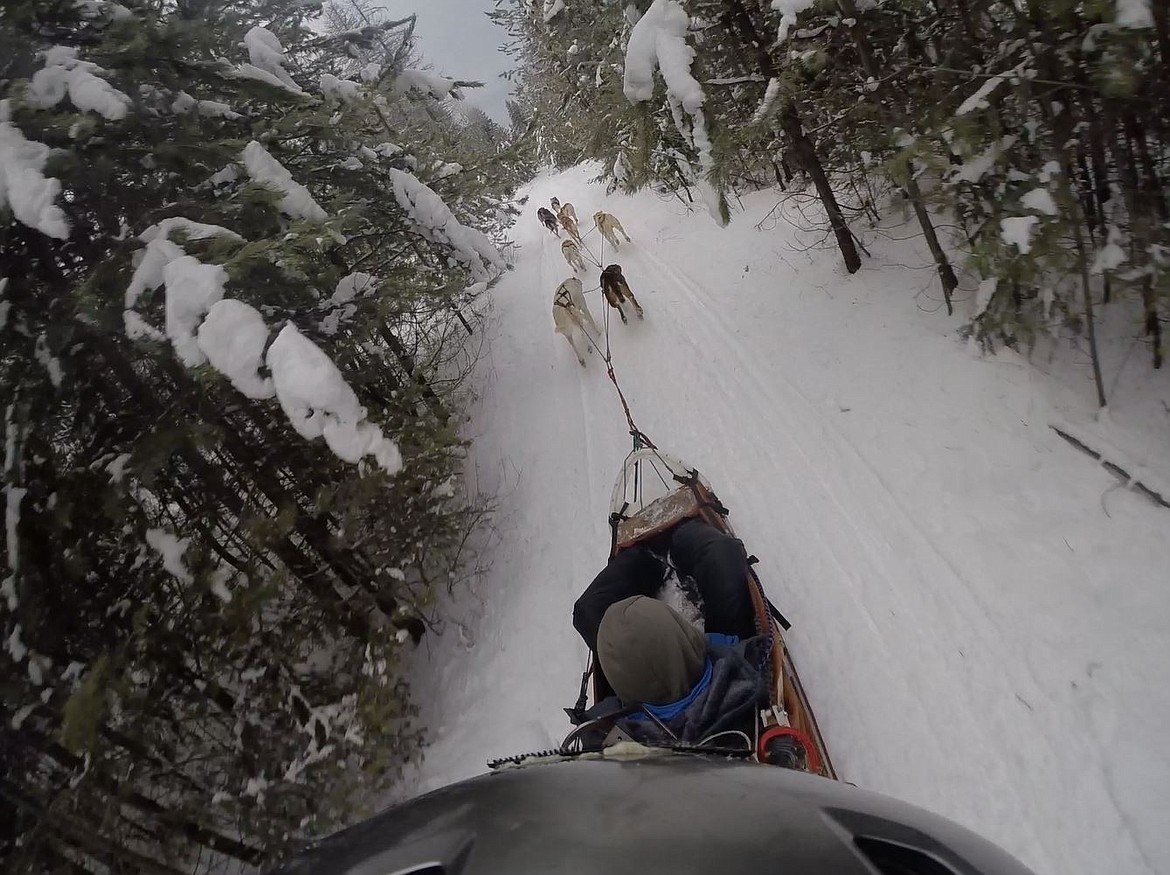
Photo by ELENA NELSON/For the Press With mentor Steve Duren driving and student Dirk Nelson in the sled, a training run is performed near Spirit Lake.
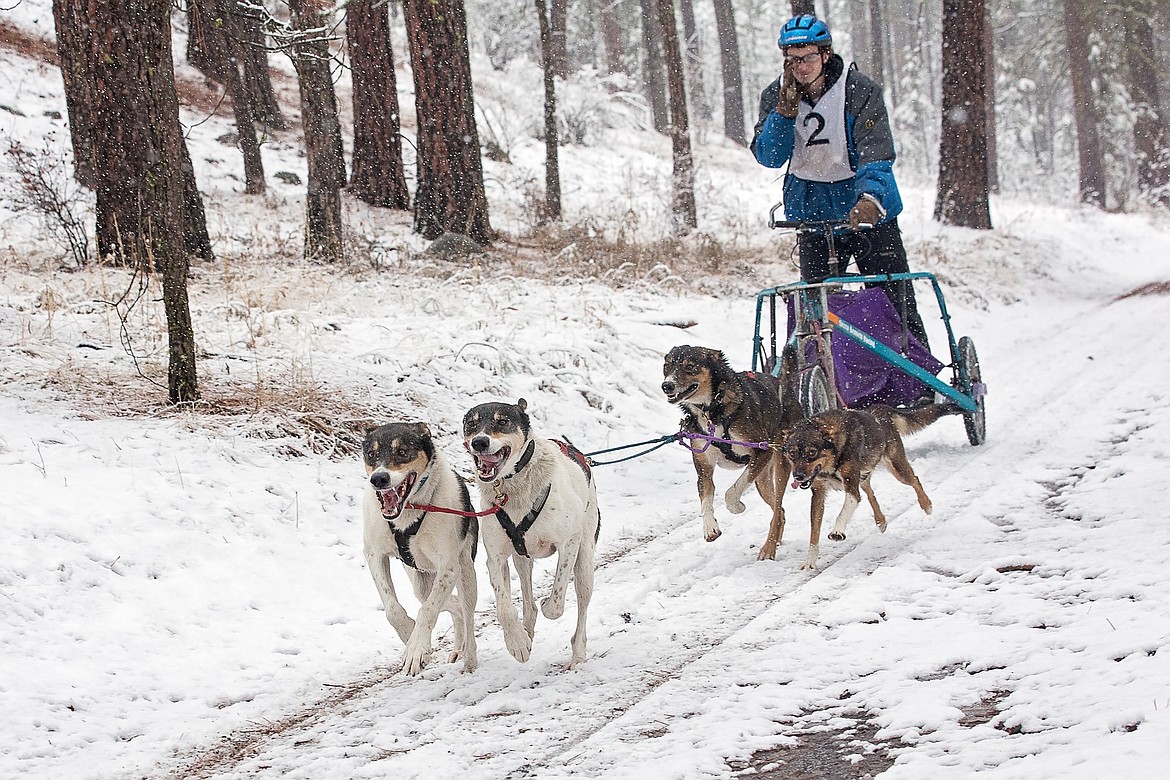
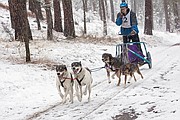
Timberlake High student Dirk Nelson competes in the four-dog sprint at the Spokane Dirt Rondy at the Riverside State Park on Nov. 5. (Photo by WENDY DEVENT/For the Press)
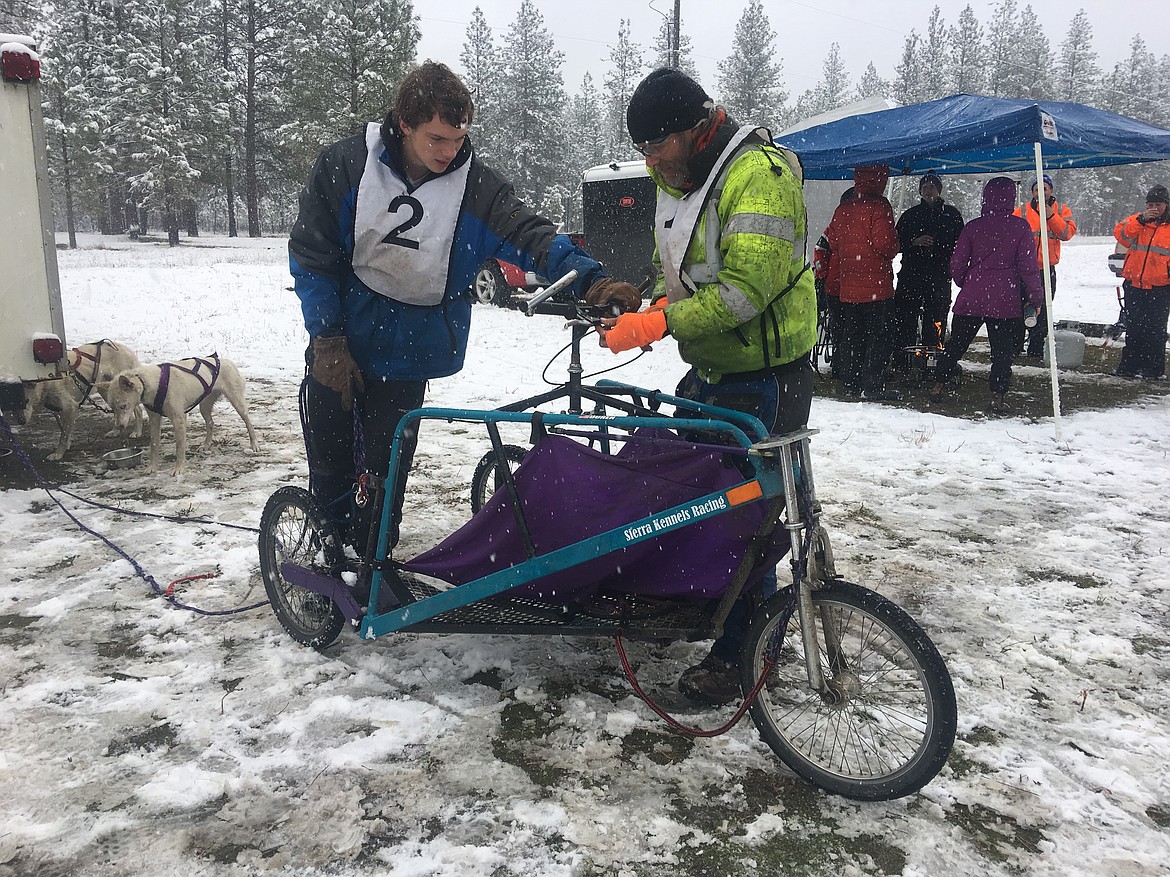
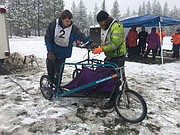
Dirk Nelson, left, and Steve Duren make cart adjustments before the Spokane Dirt Rondy race at Riverside State Park. (Photo by ELENA NELSON/For the Press)
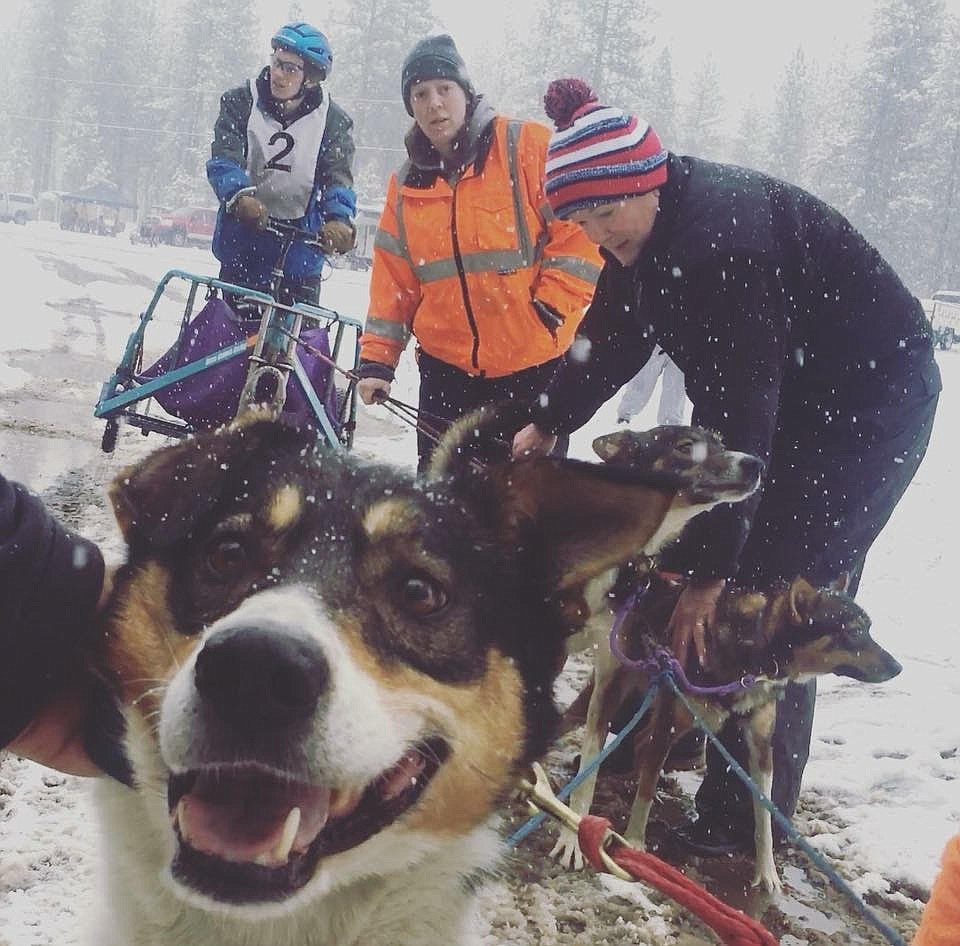
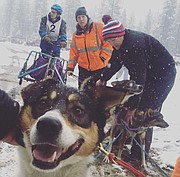
Pluto, foreground, is excited to run the second day of the Spokane Dirt Rondy as Blaze and Dublin wait in the background. From left are driver Dirk Nelson and fellow mushers Jody Berrigan and Julie Brauns before the start of the race. Mushers in other events help each other at the start, holding dogs and making sure they get out at the start smoothly. (Courtesy photo)
By BRIAN WALKER
Staff Writer
SPIRIT LAKE — Dirk Nelson has always loved dogs, but the sport of sled dog racing has taken that passion to another level.
The Timberlake High sophomore has been mushing for more than a year. After a recent second-place finish at the Spokane Dirt Rondy at Riverside State Park, there's no looking back on this trail.
"I really enjoy how peaceful it is," the 15-year-old said. "It's just you and the dogs going down the trail."
Following a team of dogs in the wilderness in the winter is an awesome experience, he said.
"All you can hear is their paws pushing the snow down," he said.
Nelson has learned the ropes of the sport through his mother's boyfriend. Steve Duren, who owns the Alaskan huskies, has been mushing for 18 years and competes in races of up to 150 miles.
Nelson drove his first team of dogs by surprise. He followed Duren and the dogs to provide water during training one day when Duren asked the teen to take over.
"Ever since then, he has been hooked," said Nelson's mother, Elena.
The Spokane race, Nelson's first, was 5 miles over two days on dirt, with four dogs pulling him in a cart. Nelson's first race on a sled will be in Darby, Mont., in January. He said he grew up watching movies with sled dogs in them and to be able to actually race with them is amazing.
Nelson said he enjoys the teamwork it takes between the mushers and the dogs to stay on course. As a cross country runner for the Tigers, he said he understands the need to pace yourself, when to speed up and the value of working as a team.
"You're talking to them and giving them verbal commands the whole time," he said. "With the sport of cross country, people are cheering you on to keep going and stay positive, and that's the same thing you do with the dogs. They listen to you really well."
Nelson said the top speed of his four-dog team is around 18 mph.
Of course, there's more power and speed with numbers as some races have 12-dog teams.
"A team of 24 can pull a Jeep Wrangler down the road at 15 mph," Nelson said.
Corners can be tricky on the race course if they’re taken too tight, but Nelson said he and his teams haven't tipped yet.
"I've seen other people do it," he said.
Duren said he sees a lot of potential in Nelson as a musher.
"Dirk really knows how to connect with the dogs and that's really important because it's all about you and the dogs when you leave that starting gate," he said. "Your job is to stay safe, and their job is to take you down the trail."
Recognizing the dogs' personalities translates to knowing how they'll react on the trail, Nelson said.
"Every dog has a different personality, just like humans," he said.
Nelson has started to train some of the younger sled dogs, riding on the cart or running along beside them to encourage them.
Duren said he was particularly impressed with how Nelson worked the dogs around a downed tree during a training run.
"We couldn't back up from where we were," Duren said.
Duren said steadfast training — hitting the trail no matter the weather — and nutrition are keys to building strong teams. Nelson assists Duren with such preparation.
"If it's time to train, we go train," Duren said, adding that running in all kinds of weather prepares the dogs for any kind of weather on race day.
Duren said he competes in five to seven races each winter — Dirk may participate in half of those, due to school — and the dogs average about 1,500 miles a year.
"That's a lot of joint movement," he said. "Last weekend alone we put in 70 miles."
He said the dogs are on a high-protein diet that includes raw meat.
"They get the best of the best," said Duren, adding that the dogs occasionally come inside but prefer to be outside. "They just want to run and please you. It's really fun when you have that bond."