
Take me out to the old - and new - ballgame



It depends on which game of the World Series you watched this year.
Either you thought that good pitching can stop good hitting.
Or you thought many of the pitchers didn’t have a chance against the good hitters of today unless they threw a perfect pitch — and if not, the ball sailed over the fence.
There were the two games pitched by the Houston Astros’ Justin Verlander where hits and runs — heck, just even contact — was hard to come by. Los Angeles Dodgers ace Clayton Kershaw also had a couple of appearances where he was in control.
But for every game like that, there was the 13-12 Astros win in Game 5 in Houston that looked more like a slowpitch softball game. Or Game 2, where the teams combined to score nine runs in the last four innings.
The Astros and Dodgers combined to hit a record 25 home runs in seven games, surpassing the previous mark by four dingers. Included was a record eight homers that were hit in Game 2.
What’s going on with the current state of the game?
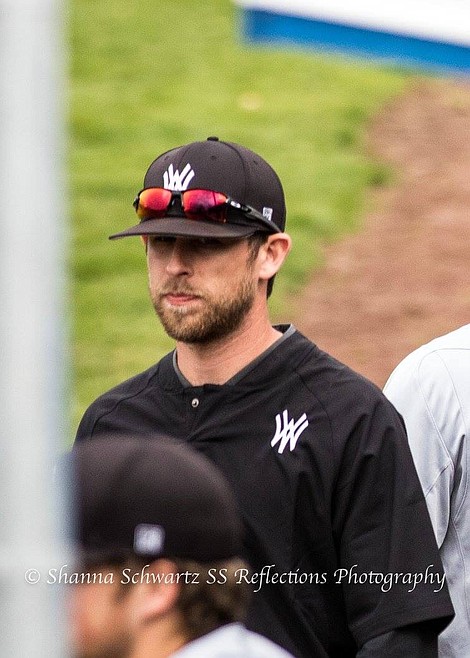
To answer that question, we elicited the expertise of three local baseball men. They are:
- Paul Manzardo, former North Idaho College baseball coach and current Lake City High baseball coach. He also coached a Coeur d’Alene Little League all-star team that was two wins away from advancing to the Little League World Series;
- Zach Clanton, former Lake City and Lewis-Clark State pitcher, and current head coach at Wenatchee Valley College. He also played on a Coeur d’Alene Little League all-star team that was one win away from Williamsport; and
- Kyle Johnson, former Lake City and Washington State outfielder, who played in the Angels and Mets organizations, reaching as high as the Triple-A level. These days, he’s executive director of a sports training facility in Post Falls, where he works with younger baseball players.
Between Game 5 of the World Series last Sunday and Game 6 on Tuesday, they responded to four questions. For space reasons, the first two questions are addressed this week; the last two are scheduled to be addressed next Sunday.
As a coach/instructor and/or a fan, what do you think of the way this World Series is playing out? In some games, it looks more like Home Run Derby. It’s almost more of a shock when a fly ball DOESN’T leave the yard, or someone hits a ground ball. But it appears that it’s more exciting and appealing to the casual fan, but as more of a baseball “purist,” what are your thoughts?
Manzardo: “The 2017 World Series between the L.A. Dodgers and the Houston Astros has been one of the most enjoyable series I have watched in a long time. The gamesmanship between the two teams has been outstanding, but probably the most amazing and exciting thing I have noticed is how both teams have the ‘refuse to lose’ mentality. Neither team is willing to give in; it’s like watching a Rocky movie — two heavyweights going at it. This World Series has been great for baseball. It’s likely to go down as one of the greatest series of all time.”
Clanton: “I love the way that this World Series is playing out. I have always loved power when it comes to baseball, whether it be a home run derby or a game it’s very exciting. Obviously as a college pitcher I would hate to step on the mound against these guys but this is as entertaining as it gets. Never a dull moment and no lead is safe.”
Johnson: “I think this year’s World Series is great for the fan base of baseball. Baseball has a very long season, and to the casual fan, they don’t watch every game. The grind of baseball is what I see most. That all of these athletes are at their peak playing ability in October — the amount of training, care, and routine that went in to making that possible, the amount of information these athletes get on the opposing team, helps immensely in their ability to prepare. You can see the chess match being played out and how much thought goes into each decision — especially when you think of the NL and having to coordinate pinch hitters and pitching matchups.”
I’ve read that some (all?) hitting instructors at the pro level are teaching their hitters to swing with more of an uppercut, to put more “lift,” so the ball has a better chance to leave the yard if it’s barreled up (as compared to the days of George Brett using the Charley Lau line-drive approach). Have you found that to be true at the levels you coach/instruct at, what do you think of that philosophy, and do you teach that method of swinging?
Clanton: “Our mantra here at WVC is ‘hit bombs to center field.’ We aim to lead our conference in slugging every year. We are believers in the modern-day approach. You could go back to Ted Williams’ book and find him talking about the best swing being slightly up. You have to match the plane of a downward moving ball, swinging your bat down as well doesn’t give you best chance of producing backspin or hitting a line drive. What frustrates me most are the coaches at Little League up to college that teach a ‘ground ball’ approach due simply because youth infielders are prone to making errors. Teach the proper plane from Day 1 and as they get stronger the ball will fly farther and farther.”
Johnson: “The swing philosophy at the professional level has changed. It’s more about bat plane — matching your bat plane with the plane of the ball, increasing the points you can make good, solid, contact. Launch angle has been a big driver in professional baseball as of late — increasing the launch angle of the ball, while sustaining the exit velocity. They don’t teach so much of an uppercut, as they’re trying to get you to hit the middle to bottom half of the ball. At the elite levels, a ground ball is simply an out. Little League, high school, some college levels, there are a lot more mistakes, so the amount of ground balls that turns into errors are higher. You want people on base. At the big league level, you need to hit it over the infield. The infield athletes are too good, they’re too long, and too athletic.
“Having said that, from a baseball instruction standpoint, you have to start with the basic fundamentals of hitting. If you teach a 7-year-old to hit fly balls, he won’t get very far. You have to have a great understanding of your swing before you can manipulate launch angles and trajectory. The majority of pro guys don’t start thinking along those lines until Double-A, Triple-A and the big leagues. That’s where this really comes into play — taking a great hitter and making him that much better.”
Manzardo: “Yes, I believe the philosophy of hitting has changed to some degree, especially with elite hitters. I still believe in the hitting foundations of Charley Lau. I believe you coach to your audience or skill sets based on fundamental concepts and techniques of hitting. How you communicate the approach of hitting to a Little Leaguer is totally different than how you communicate to a high school or even a college player. I believe you try to keep it simple, so the player can experience success. Often we forget that these young athletes do not possess the mental capacity or physical strength to perform like an elite college or professional baseball player.”
“Once the hitter has developed a good understanding of the basic fundamentals of hitting and is physically and mentally mature like the elite hitters we are seeing in the World Series, then they can start focusing on more advanced concepts of hitting. After fundamentals and strength are achieved then they can focus on advanced techniques such as launch angle and exit velocity.”
Mark Nelke is sports editor of The Press. He can be reached at 664-8176, Ext. 2019, or via email at [email protected]. Follow him on Twitter@CdAPressSports.