
'Water is the life of all of us'

JAKE PARRISH/Press file Coeur d’Alene Tribe members row toward City Beach on June 8, 2016, in the “Warx” canoe the Tribe carved using traditional methods. The Tribe will receive the Watershed Hero Award from the Sierra Club Friday night during its annual Winter Waters event at the Patsy Clark Mansion in Spokane.
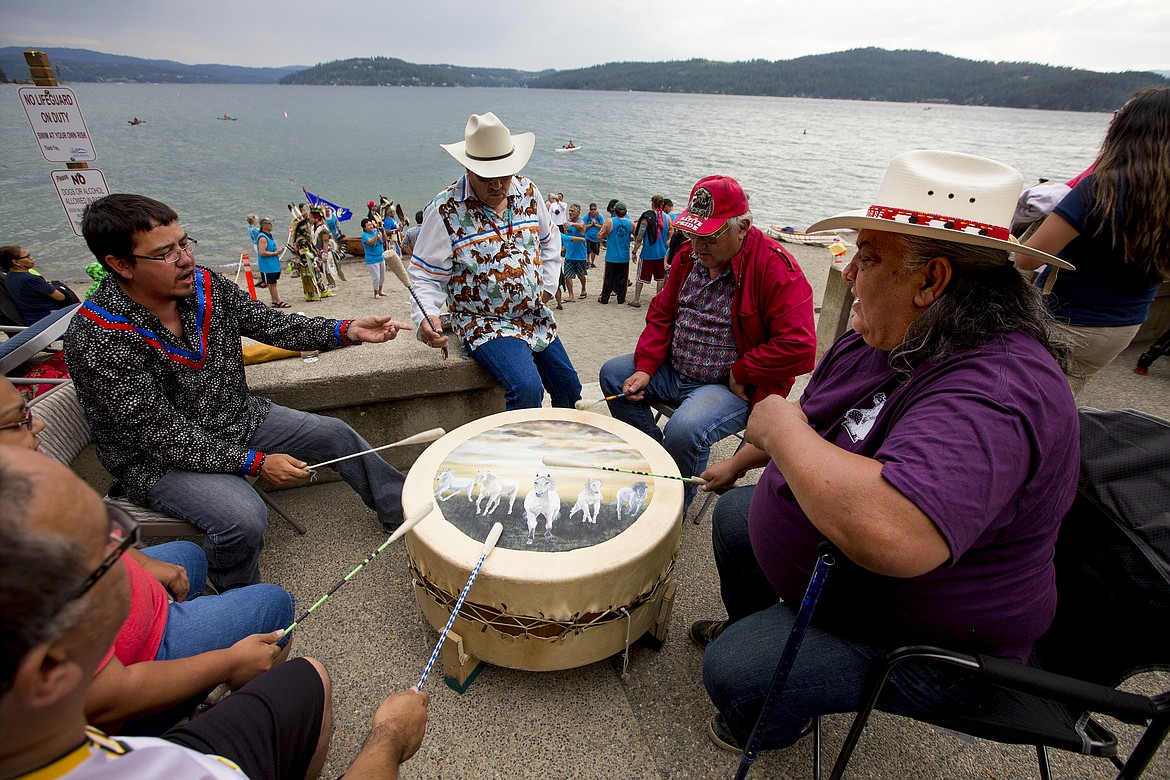
JAKE PARRISH/Press File Members of the Coeur d’Alene Tribe play a traditional drum after the “Warx” canoe landed at City Beach.
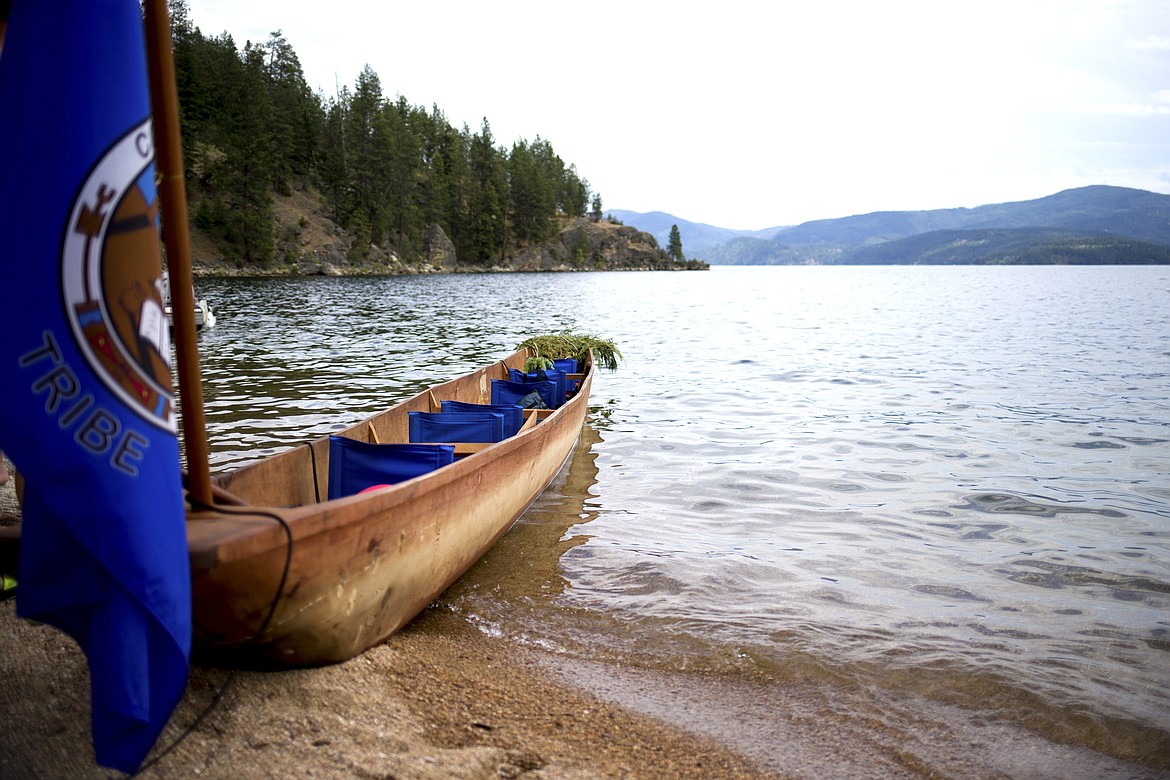
JAKE PARRISH/Press File After about a year of work, the Coeur d’Alene Tribe set sail to the finished “Warx” canoe on June 7, 2016 from Benewah Lake. The traditional canoe, carved by hand from the trunk of a cedar tree, landed at City Beach in Coeur d’Alene on June 8.

JAKE PARRISH/Press File Coeur d’Alene Tribal member Alyssa Hagnes dances in ceremonial fashion in traditional dancing clothes.



By BRIAN WALKER
Staff Writer
COEUR d’ALENE — The Coeur d'Alene Tribe's history of protecting Lake Coeur d'Alene will be recognized on Friday night.
The Tribe will receive the Watershed Hero Award from the Sierra Club during its annual Winter Waters event at the Patsy Clark Mansion in Spokane, celebrating how people have protected water for the common good.
"In protecting the lake, we honor our ancestors who focused their lives around the lake," said Coeur d'Alene Tribe Chairman Chief Allan. "Even today we find the lake is still at the center of our lives, not only for the Tribe but really for all North Idahoans.
"We want to ensure the health and survival of the lake for our children and for our children's children. It is an honor to be recognized, but that's not why we do it. We do it because it's the right thing to do and because water is the life of all of us."
The Tribe has played a major role in restoring the Coeur d'Alene Basin's waters that were contaminated with mining waste, according to the Sierra Club's Upper Columbia River Group and the Center for Environmental Law and Policy, which are jointly hosting Friday's event.
"Lake Coeur d'Alene is much-beloved and an economic engine for the Inland Northwest," the organization stated.
"Through this honoring event, we hope to provide a broader, regional understanding and recognition not only for the work the Tribe has undertaken in the past, but also of the Tribe's continuing efforts to meet the formidable challenges needed to protect Lake Coeur d'Alene."
Nearly a century of mining in the Coeur d'Alene Basin led to the release of waste into streams and rivers that flow into Lake Coeur d'Alene. The Tribe was the original land manager in the basin.
The Tribe has Natural Resources and Lake Management departments of about 75 total people. Programs include fisheries, wildlife, air quality, water resources, shoreline protection, lands and realty, environmental planning and recreation management.
The Tribe became involved in the cleanup of the basin in the mid-1980s when the U.S. Environmental Protection Agency began its Superfund work in the Silver Valley.
The Tribe received $100 million to conduct natural resource restoration efforts as a result of the dam relicensing process that ended in in 2011.