
Take a hike ... efficiently
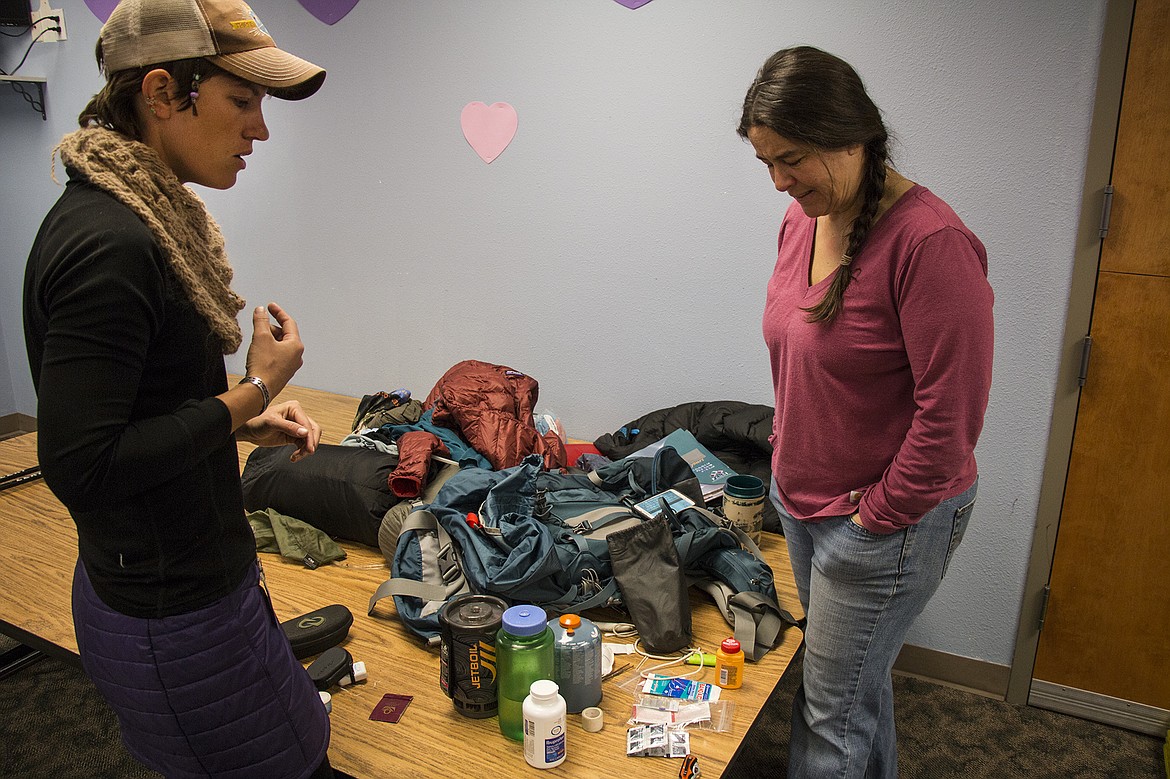
BETHANY BLITZ/Press Laura “Beads” Talaga, left, goes through Kate Walker’s backpack with her to make it lighter. Talaga said the key is to minimize and stay safe.
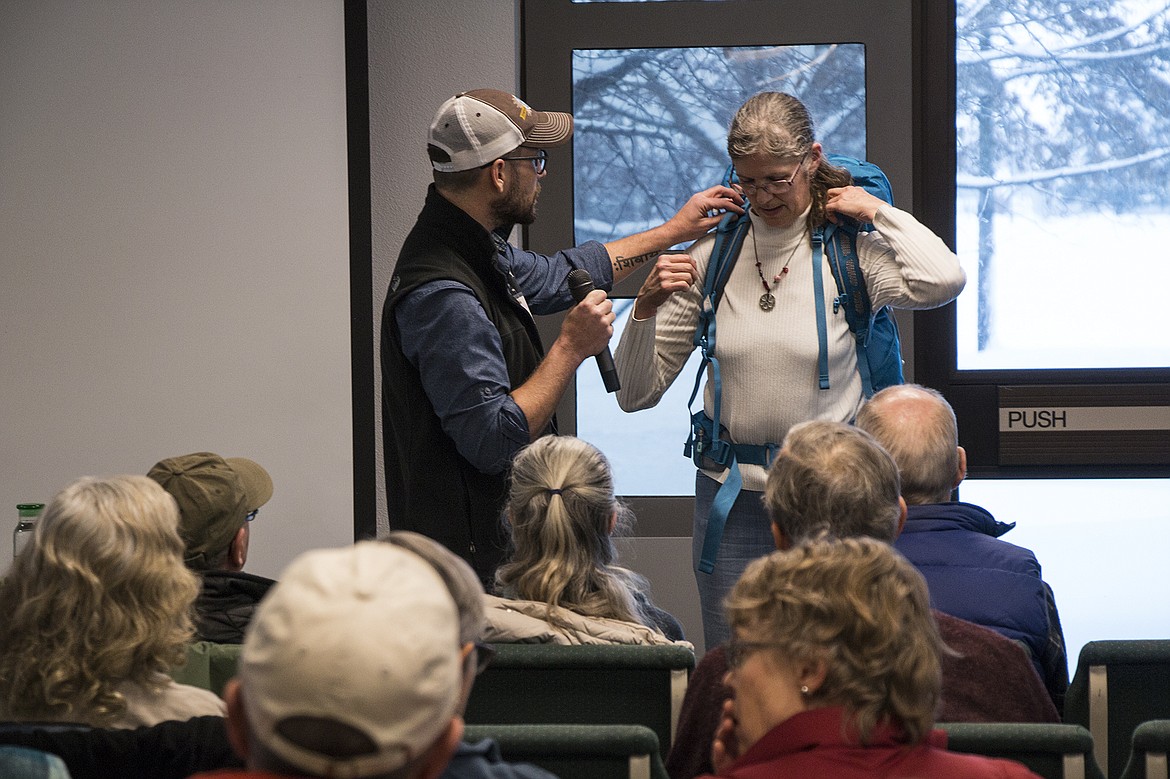
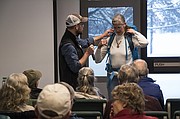
BETHANY BLITZ/Press Tim “Tribhu” Plaza demonstrates how to fit a pack on Darcy Varona of Spokane at the Inland Northwest Ruck on Saturday.
BETHANY BLITZ/Press Tim “Tribhu” Plaza demonstrates how to fit a pack on Darcy Varona of Spokane at the Inland Northwest Ruck on Saturday.
BETHANY BLITZ/Press Tim “Tribhu” Plaza demonstrates how to fit a pack on Darcy Varona of Spokane at the Inland Northwest Ruck on Saturday.
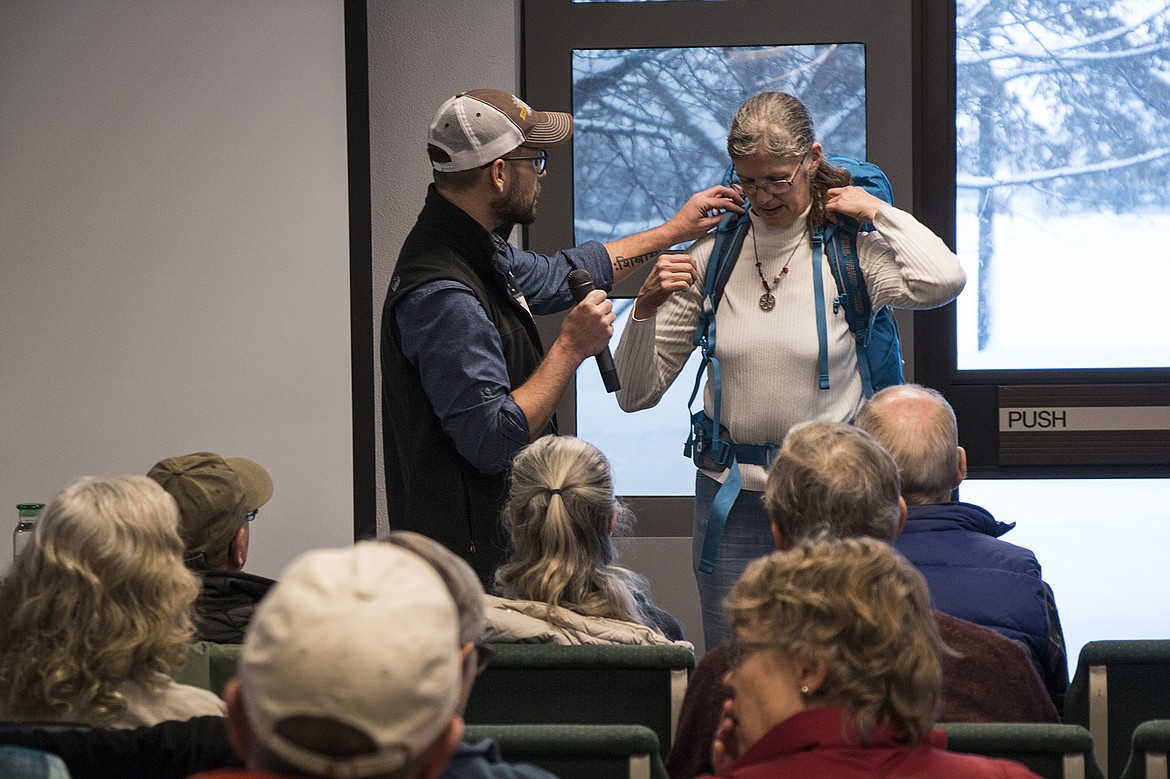
BETHANY BLITZ/Press Tim “Tribhu” Plaza demonstrates how to fit a pack on Darcy Varona of Spokane at the Inland Northwest Ruck on Saturday.
By BETHANY BLITZ
Staff Writer
Kate Walker stood back and watched as her backpack was emptied and its contents criticized.
The tube of toothpaste, gone. The sewing kit, garbage. Her tent, actually a good tent.
Walker, from Sagle, joined other area backpackers for the American Long Distance Hiking Association — West’s third annual Inland Northwest Ruck on Saturday at Lake City Community Church, where backpacking experts shared their tips and tricks for hiking long trails. The term "ruck" comes from rucksack, the word for a backpack in German.
Walker, who is preparing for a 200-mile hike along the Arizona Trail, said she was there to soak up as much information as she could.
“I used to backpack in college and it’s been years since I’ve done it,” she said. “I’m not as extreme as some of the people here. I want it to be an enjoyable experience; I’m even bringing knitting.”
Panels of experienced backpackers spoke about food and nutrition, proper footwear and how to properly fit a pack to one’s body size.
Laura “Beads” Talaga, from Spokane, ran a workshop where people could bring their backpacks in and she’d help them get rid of excess items and weight.
One of the most common suggestions she had for people were to put liquids, such as neosporin and sunscreen, in tiny containers. She said it’s unlikely someone will use a whole tube of neosporin and the larger tubes easily explode in backpacks.
She also told a lot of people that their first aid kits are too big. Gauze and athletic tape, she said, can be replaced by a bandana and duct tape. And “band-aids are useless,” she said.
Bob Turner, event organizer, said the workshop wasn’t to teach backpacking, but rather to inspire backpackers to take the next step to do multi-month treks such as the Pacific Crest Trail, the Appalachian Trail and the Continental Divide Trail.
“One of our big concerns, too, is that backpacking is exploding and we want to teach the responsibilities that go with that, like leave no trace,” Turner said.
One of panel speakers was Mig Whitt from Athol. She went to the Ruck last year and was inspired. In March she will begin the Pacific Crest Trail and will take five months to hike from Mexico to Canada.
She shared about the process she’s been going through for planning such a big hike without ever having done one before.
She spoke about how to store food in boxes along the hiking route and how to afford to drop everything for months and afford to go on a trail.
Whitt herself is an artist and plans on painting while on the PCT. She said she’ll sell her paintings when she gets back. She also has a GoFundMe page where donations will be divided between helping to finance her trip and donations to Casting for Recovery and the Mazie Morrison Foundation.
What she really wanted people to take away from her presentation is that “backpacking is 80 percent mental, 10 percent heart and 10 percent walking.”