

NIC welding program, industry continues to grow
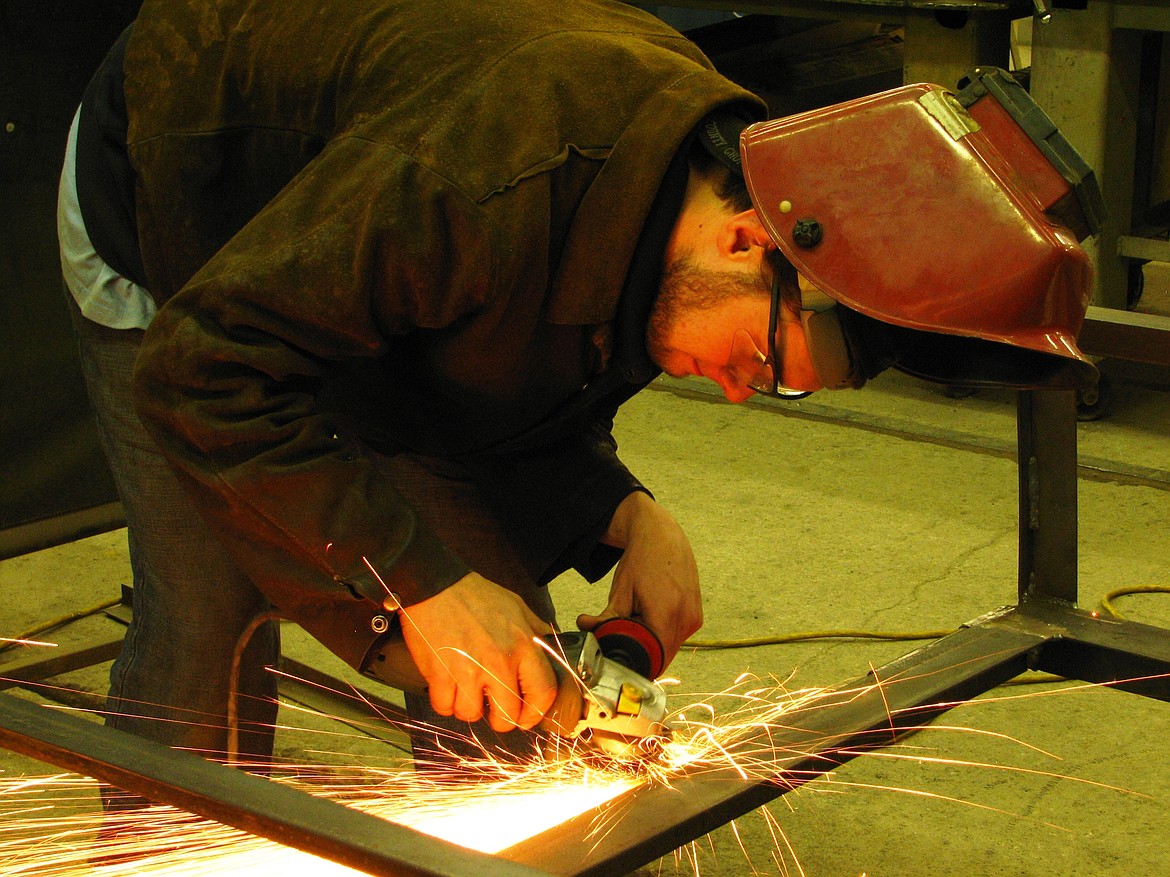
Photo by TOM GREENE/North Idaho College A North Idaho College Welding Technology student welding in class. The welding industry is projected to grow by about four percent in the next 10 years.
By KAYE THORNBRUGH North Idaho College
As a farmer, Matt Lemieux has picked up a wide variety of skills over the years. Repairing equipment by himself is one of these skills, with the ability to weld taking it to the next level.
“It didn’t look pretty, but it held together,” he said.
Lemieux has decided to make welding his new career.
“In farming, you can make a living, but you want to be able to retire,” Lemieux said. “Welding pays better than most entry-level jobs.”
When Lemieux decided to train in welding, North Idaho College’s Welding Technology program was the obvious choice for him, because of the convenient location and affordable tuition.
He said he may go on to pursue a bachelor’s degree in welding technology, but for now, he’s focused on completing his education at NIC.
“It’s a really thorough program,” Lemieux said. “They cover everything.”
Lemieux’s goal is to weld for a boilermaker company, or even start his own fabrication/welding service. He said the training he received at NIC will open doors to those possibilities.
“The industry has been good to me. I’ve never been without a job,” said Tim Straw, NIC welding instructor. He has 20 years of industry experience and has been teaching for more than a decade. “I want to give back and train new welders.”
When Straw began teaching at NIC, Welding Technology was a nine-month certificate program. Since then, he’s helped to grow it into a two-year associate degree program, and he thinks the program can continue to grow.
“We’re constantly trying to grow and improve,” he said. “We’re part of the community, and we’re here to build skills to help people get employed.”
The Welding Technology program complies with national standards established by the American Welding Society. It combines theory and applied shop practice to prepare students for entry-level employment. In addition to instruction on welding processes, students will learn blueprint reading, layout procedures, metallurgy, and safety.
Beyond welding, Straw said the program emphasizes communications skills to help students land a new job or a better job when they’ve completed the program.
Outside of the classroom, Straw’s students get practical experience from community projects that have been worked into the curriculum, such as bike racks for the Coeur d’Alene Police Department. Straw said it’s a way to give to the community while also giving his students real-world projects.
The median pay for a skilled welder is around $38,000 per year, and the industry is projected to grow by about four percent in the next 10 years.
Even with 15 years of welding experience already under his belt, Lemieux said the training he’s received at NIC has put him in a better position to find work in this field.
“I’m a lot more valuable than I was before,” he said.
Welding is a diverse field, with job opportunities in the manufacturing, automotive and aircraft industries, and more. Straw said that welders can find local jobs in the Coeur d’Alene and Spokane areas, especially in manufacturing. There are also many more opportunities out of state.
“It’s a highly sought after job,” Straw said. “There’s a big demand for skilled workers. We want to get these employers what they need.”
For information on NIC’s Welding Technology, call (208) 769-3311 or visit www.nic.edu, click on “Instructional Programs” and then select “Welding Technology” from the drop-down menu.