
Goodbye trees, hello better commute
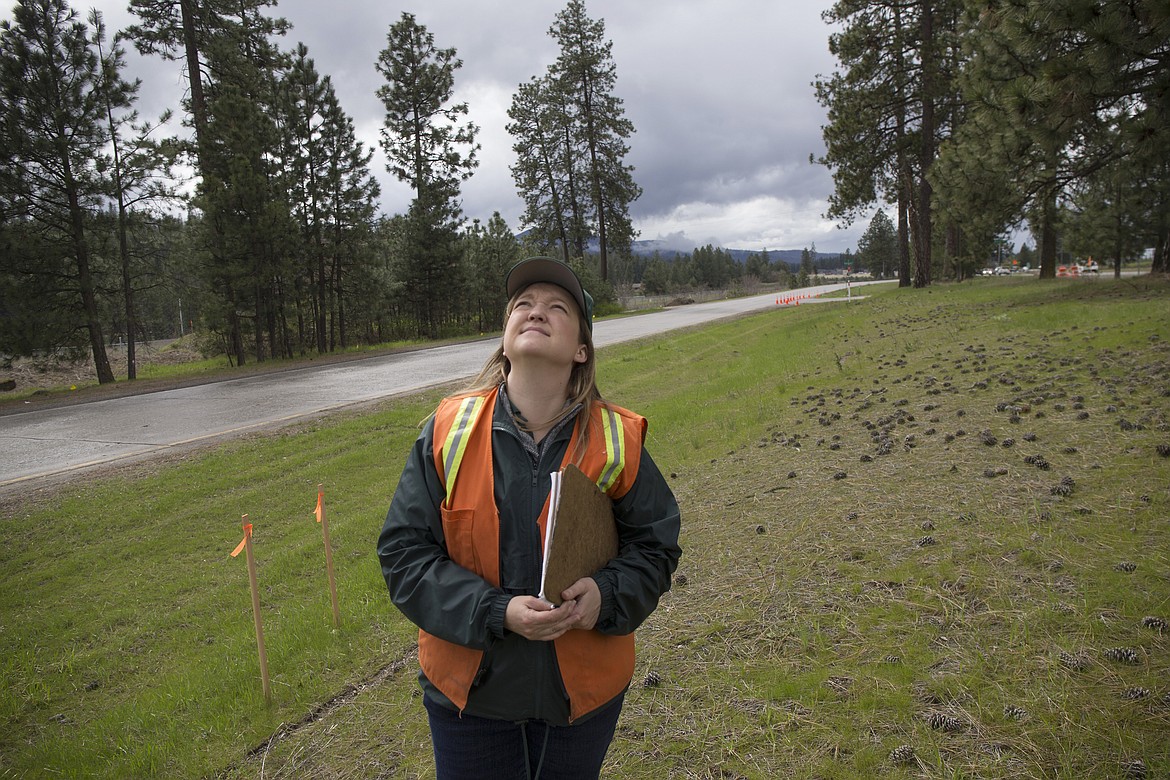
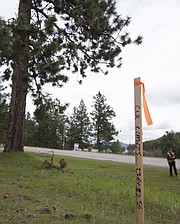
Urban forestry coordinator for the city of Coeur d’Alene Katie Kosanke stands near a section of Ponderosa pines which will be cleared from along Seltice Way in Coeur d’Alene, to make room for a roundabout at the intersection of Atlas Road. The roundabout will speed up the flow of traffic frequently seen at the intersection of the two roads.
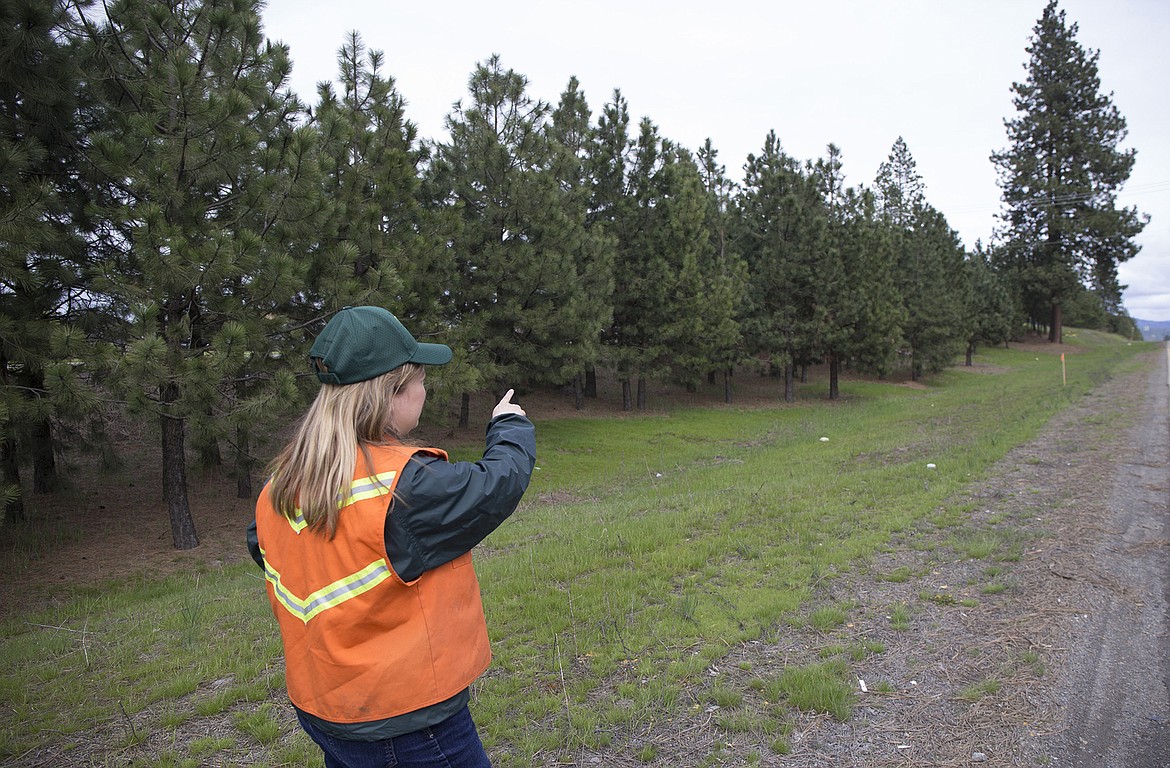
Photos by LISA JAMES/Press Left: Katie Kosanke, urban forestry coordinator for the city of Coeur d’Alene, stands near a section of Ponderosa pines which will be cleared along Seltice Way in Coeur d’Alene to make room for a roundabout at the intersection of Atlas Road. Right: Kosanke points to a section of Ponderosa pines which will remain along Seltice Way east of Atlas Road in Coeur d’Alene.
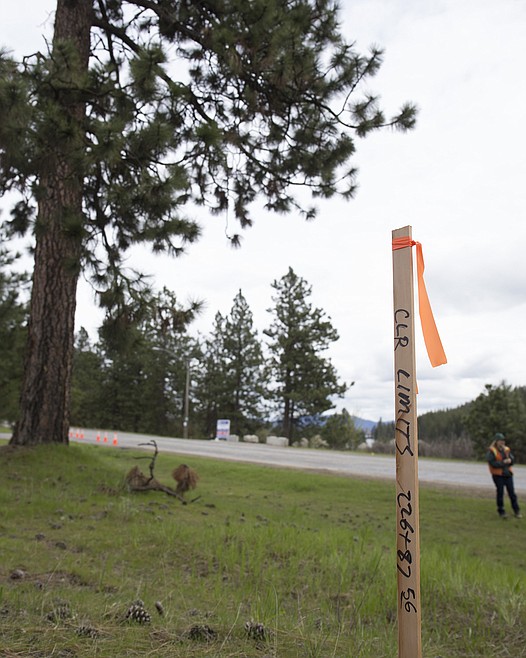
LISA JAMES/Press A section of Ponderosa pines will be cleared from along Seltice Way in Coeur d’Alene, to make room for a roundabout at the intersection of Atlas Road. The roundabout will speed up the flow of traffic frequently seen at the intersection of the two roads.
By RALPH BARTHOLDT
Staff Writer
COEUR d’ALENE — The strip of pines in the median of Seltice Way is a landmark of sorts, giving a boulevard-like flavor — Idaho-style — to the east-west route that connects Coeur d’Alene and Post Falls.
Ann Ferguson of Uniburr, a tool manufacturing business on the 3100 block of Seltice Way, remembers when this was the main road, called Highway 10.
The ponderosas have graced the median for as long as she can remember.
As part of a city revitalization project, a couple clumps of the ponderosa pines — some of the stately, old monarchs, as well as young upstarts — will be cut beginning this week to make way for two roundabouts meant to keep the ever-increasing traffic on the popular thoroughfare flowing smoothly.
The $14,000 tree removal work is part of the first phase of the $5.44 million Seltice Way revitalization project set to be completed next year. It will include roundabouts at the Atlas and Grand Mill Lane intersections, bicycle paths on both sides of the road as well as shared-use paths and water and sewer upgrades.
Coeur d’Alene Urban Forester Katie Kosanke has walked the routes around the project areas several times taking inventory of trees that may come down and those that must be removed to make room for the circular intersections.
She doesn’t take the tree removal lightly.
“Rightfully, people get passionate about trees,” Kosanke said. “I get passionate about trees, but we have to have roads.”
The latest city project — one of several slated for the upcoming construction season — will help accommodate the more than 16,000 cars, trucks and freighters that travel on Seltice Way every day, according to the city.
According to the city’s inventory of the median’s 262 ponderosa pine bigger than 15 inches in diameter, 46 will come down.
Of the 337 smaller trees, between 7 and 14 inches, 126 will be removed.
“There is a great number of smaller trees that were not surveyed,” Kosanke said. “Some will be retained, some will be removed.”
Ferguson considers the tree removal a necessity, just like the need for an upgraded intersection.
“This is a big bottleneck here,” Ferguson said.
At 2:30 in the afternoon, wearing an orange vest and carrying a clipboard, Kosanke walks through the median across from the flagged and spray-painted driveway of Uniburr, stepping over a mat of pine needles and cones that litter the forested swath. She points out the white spots painted on the trunks of trees slated to be cut down.
“We’ve tried to keep as many as we can,” she said.
The stakes and ribbons on the road’s shoulders give an idea of the work ahead, which includes not just taking down the trees, but filling and dirt removal to replace the cumbersome system of interchanges for motorists leaving or entering Seltice Way.
Despite the tree removal in the two areas, the bulk of the boulevard will remain as-is, city engineer Chris Bosley said.
“Much of it will be preserved,” said Bosley. “It will still have the boulevard feel to it.”
The plan calls for bringing back some of the prominence Seltice Way lost when Interstate 90 became the go-to route through Coeur d’Alene.
“We want to make it more of a gateway,” Bosley said. “We want to give it more of an identity than it has today.”
That includes planting additional trees along the roundabouts and adding public art, he said. The city decided on roundabouts instead of streetlights, Bosley said, because they are low maintenance, can handle the traffic flow and allow motorists to travel unimpeded during low traffic hours.
Though tree removal is a sensitive issue in a city that dubs itself a tree city, some longtime residents view the process with pragmatism.
Ferguson said she has over the years witnessed limbs, tops and sometimes entire trees blown down on Seltice Way during storms. She thinks, for safety reasons, the median should have small trees not subject to the area’s inclement weather.
“Not that I don’t love trees,” she said. “But, it’s a concern.”