
Challenges galore in job recruitment game

LISA JAMES/ PressEve Knudtsen, owner of Knudsen Cheverolet, sits for a portrait in her office at the dealership in Post Falls.

LISA JAMES/Press Jobs Plus President Gynii Abracosa Gilliam, right, and Business Relations/Communications Officer Amber Conklin pose for a photo in their downtown office overlooking Lake Coeur d’Alene.
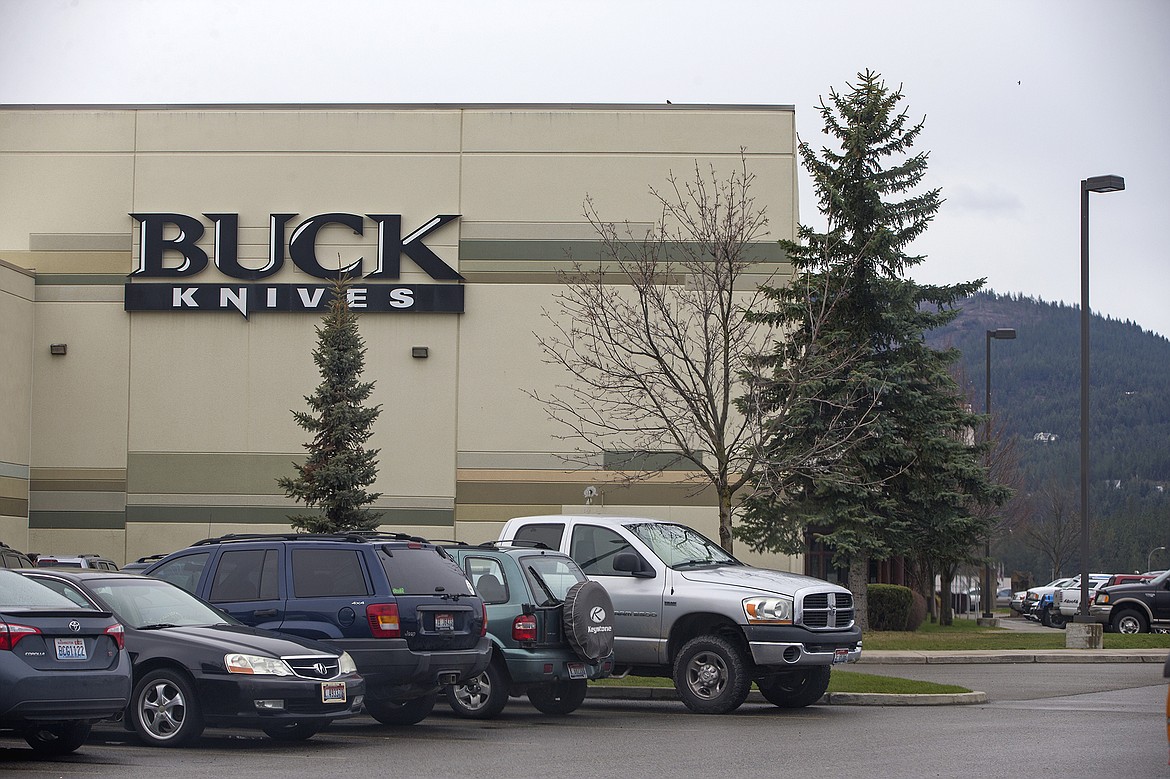
LISA JAMES/Press It’s an economic development agency that recruits businesses like Buck Knives, which uprooted from California and moved its operations to Kootenai County.

LISA JAMES/Press It’s an economic development agency that recruits outside businesses wanting to expand operations regionally or nationally, like Orgill, Inc.
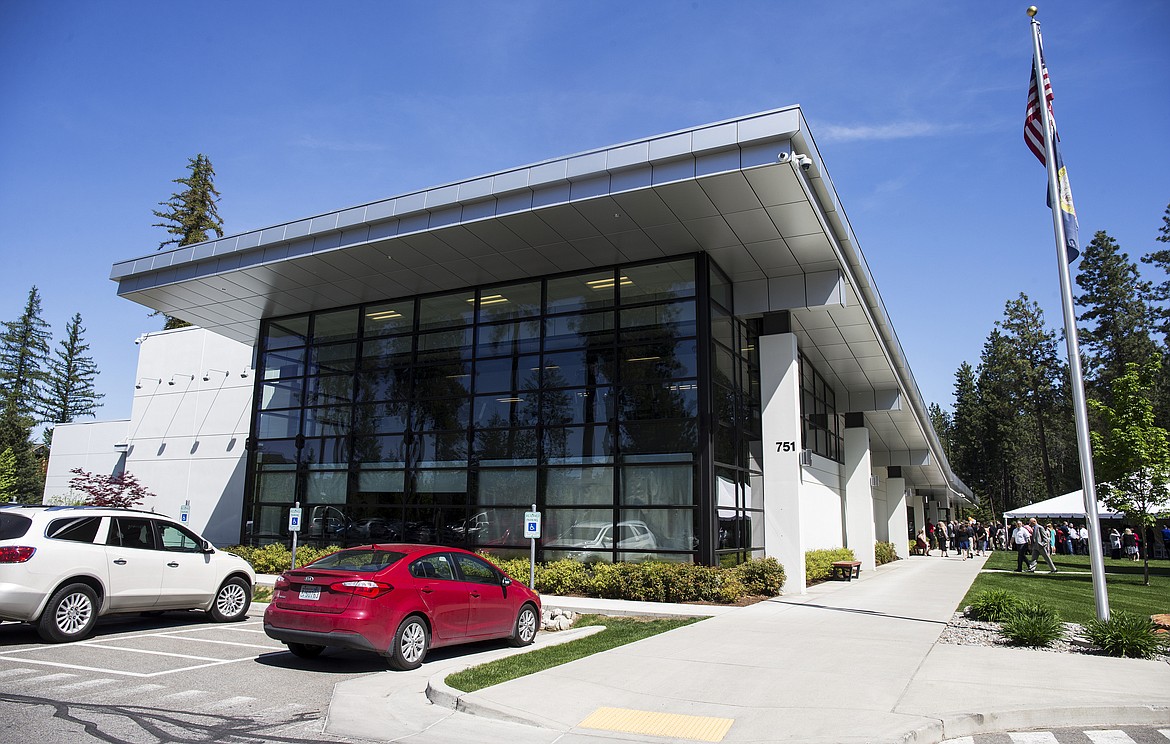
LOREN BENOIT/Press It’s an economic development agency that recruits outside businesses like Alliance Data, then helps them expand even further in Kootenai County.

LOREN BENOIT/Press What is Jobs Plus? It’s an economic development agency that works hard to keep good local businesses like Empire Airlines from moving outside Kootenai County.

It is NOT, contrary to popular opinion, an employment agency.





Second in a four-part series on Kootenai County economic development
By MIKE PATRICK
Staff Writer
When Foxtrot landed in Post Falls, Eve Knudtsen knew what and when.
She just didn’t know who.
That’s because Foxtrot was the code name for Orgill, Inc., a blue-chip company injecting about 125 good-paying, benefitted jobs into the region and breathing fresh air into the huge but lifeless site previously occupied by Kimball Office.
The code name wasn’t just a game; it’s an essential part of doing business as Jobs Plus, Inc.
“We code name everything,” said Gynii Abracosa Gilliam, the Jobs Plus leader for just over two years. “The board as a whole would prefer not to know what the code name matches.”
Gilliam smiled.
“They purposely forget their decoder ring.”
For Knudtsen, chair and nine-year member of the Jobs Plus board, that forgetfulness is a blessing.
“I’m so glad we talk in code names because I don’t know if I can keep a secret,” she said. “People can ask me stuff — and they do: ‘Well, do you know about this project here?’ And I’m like, ‘Ummm, not much. Everything we do has a code name.’ It gives me plausible deniability so when Mike Patrick calls up and says, ‘Hey, what about this?’, I’m like, ‘I wouldn’t know who that company is.’”
Shhhhh!
So why is secrecy so important? Jobs Plus receives roughly 30 percent of its $360,000 annual budget from the public — Kootenai County and the county’s largest cities — so shouldn’t the recruitment of new businesses to the area and the efforts to retain local businesses tempted to go elsewhere be a matter of public record?
Gilliam concedes that more publicity for Jobs Plus would probably be beneficial in many ways, but that secrecy is essential.
“The company might not want their competitor to know they’re looking at our site,” she said. “They want to capture this market and they want to be ahead of their competition.
“The publicly traded companies have to keep it quiet or the SEC [Securities and Exchange Commission] will get after them if they look like they’re manipulating their stock prices.”
In other words, the companies looking at moving here are at risk until a firm decision is made and can be announced.
“A lot of time the executive team is just exploring possibilities,” Gilliam said. “They don’t want to get their entire staff worried. Sometimes even companies that are just moving from a small facility to a larger facility don’t want to let anybody know yet because of workforce worries. You don’t want to distract them. You want productivity to stay the same.”
There’s at least one other risk.
“Sometimes information leaks and somebody finds out who that company is, and suddenly,” Gilliam said, “the price of that property is no longer a feasible number. And then you lose the project.”
The veil of secrecy, starting with code names and ending when companies are good and ready to make an announcement, is just one aspect of the competitive nature of recruiting businesses. But on the whole, the game has changed significantly since Jobs Plus was born 30 years ago this spring.
Team spirit
For one thing, the once bitter competition with Spokane has softened from figurative boxing matches to occasional group hugs. Back in the day, archived Press articles reflect gleefully, Kootenai County celebrated landing a new business only slightly more than it rejoiced in Spokane not getting that business.
When Gilliam is asked if she’s the kind of recruiter who bloodies her knuckles fighting for businesses or the kind who prefers hugs and working together with Spokane, she chooses her words carefully:
“I’m more of the hug and let’s work as a group person,” she said. “That’s always been my style. Our competition continues to be Utah, the coast of Washington and Oregon — not Spokane so much because we’re working with Spokane. We’re way too close to be at odds with them. We have the same industry strengths, the same airport, I-90 runs across both of us.
“We are stronger as a unit than if we were trying to go against each other.”
But isn’t there a “but” in there?
“I do have a very competitive streak that gets us the wins,” she said. “A friend once told me that there’s a bulldog in me when I get that sixth sense that we can win. He says when you get that feeling, you’re in overdrive — willing to do what it takes to win for the community.”
Gilliam also points out that, taken as a region, Spokane and Kootenai County together crack the top 100 population regions in the U.S., a designation that helps both.
“If we combine our MSA [Metropolitan Statistical Area] we’re much stronger, so companies will look at us ... because the workforce is significant. There’s also a lot of cross traffic.”
I-90 hustle
According to the Idaho Department of Labor and the U.S. Census Bureau, about 10,000 people are employed in Spokane but live in Idaho. Going the other way, about 5,000 work in Idaho but live in Spokane.
Knudtsen’s overview runs the same direction as Gilliam’s.
“Things have changed and we’ve become more regional I believe than when we first started out,” said Knudtsen, the owner of a Chevrolet dealership that bears her family name. She knows something about competing with Spokane. “There are companies now that are going to fit better in Idaho than they would in Washington. Are we still competitive? Absolutely. But collaborative? That would be true, too.”
Knudtsen and Gilliam form a united front, as well, in describing greater competition from surrounding states.
“Every state around us has more money than us for incentives,” Gilliam said.
Asked about Idaho’s relatively high corporate income tax, she acknowledged its impact: “Ours is high. It hurts us; it’s a challenge. But we can counter that because our cost of living is lower and then there’s that two-edged sword with our workforce. It’s cheaper although we are pushing more and more to get that to $16.50 an hour and higher. Our incentives don’t kick in until that $16.50 has been met.”
And asked what Idaho could do to level the business-recruitment playing field with neighbor states, Knudtsen shared this perspective:
“I’m looking at the whole picture on state corporate income tax,” she said. “I’m all for tax relief, as long as that doesn’t mean it has to be offset with a higher tax somewhere else. So I think tax policy has to be looked at very carefully. It’s about limiting the size of government. And listen, that’s one of the things that’s really attractive about Idaho. The companies that come here can rest assured that something really weird won’t happen in the Legislature. The Republicans and Democrats both tend to be fiscally conservative. Stability is a good thing when it comes to recruitment, and we have that.”
Safe landings
Knudtsen and Gilliam say that despite any state-sponsored competitive advantages others might wield, Kootenai County can more than hold its own.
“At the state level, we don’t have a lot to get them to be a prospect for us to begin with,” Knudtsen said, “but we have so much to close the deal with here. Whatever we could do to attract them here, from a competitive standpoint, would be good because once they land here, we got ’em. We got ’em! But they’ve got to land here.”
That was the late Bob Potter’s philosophy the first 16 years of Jobs Plus, carried on another dozen years by Steve Griffitts: Get prospects here, and the region pretty well sells itself. While the region remains a recruiting dynamo, the overall Jobs Plus business model has changed with the arrival of Gilliam and perhaps some shifting currents from the board.
“Gynii has so much energy,” Knudtsen said. “Steve had energy too — it’s just different. The model we use to recruit now is a little different, too. Bob Potter and Steve went to the company. They knocked on the door and they talked to the CEO about relocating the company here. We work more with site selectors now. That’s why it’s really important to have something to entice them into the game. That’s why we need something up front competitively, to get on the list, because if we get on the list, we’ll get them here.”
A new game
The direct phone calls to CEOs in Potter’s days and the long flights in Griffitts’ time have largely been supplanted by what Amber Conklin calls “relocation headhunters.” Conklin, the business relations and communications officer for Jobs Plus, is referring to the huge role site selectors now play in economic development.
According to Gilliam, Jobs Plus works closely with local commercial real estate brokers who often are contacted by site selectors working quietly for larger companies. There’s much less outreach from Jobs Plus these days, and much more focus on fast, thorough responsiveness to inquiries.
“The leads come from our commercial broker partners, from our Chamber referrals, the cities, the county, site selectors ... They call us up or we get introduced by one of these partners,” Gilliam said.
Knudtsen said the various partnerships funneled through the Jobs Plus office — comprised of Gilliam, Conklin and administrative assistant Elizabeth Coppess — function efficiently. That’s when effectiveness kicks in.
“One of the things we do very well is we get information turned around very quickly,” she said. “The feedback that Gynii has gotten ... is that we’ll always come in with our information first, and that’s because Gynii has it laid out in a step-by-step process that Elizabeth and Amber can follow if Gynii’s not right there to do it herself.
“We’ve brought a lot of standardization to the process. We know when that site selector makes an inquiry, we know what they need, and we know what they need when they need it.”
Fine dining
Orgill officials are among the Jobs Plus recruits who rave about the superior customer service they received and the cooperative spirit they experienced here. Gilliam loves to tell the story of a dinner Jobs Plus put together as it attempted to seal the deal for Orgill. Even though Post Falls was the logical site for Orgill because the former Kimball Office space available, county commissioners, Hayden Mayor Griffitts and Coeur d’Alene Mayor Steve Widmyer also attended the dinner with Post Falls Mayor Ron Jacobson to lend their support.
“Mayor Widmyer actually offered his staff if Post Falls needed it,” Gilliam said. “That says a lot about our community, and the company noticed it. They actually said, ‘We were so pleased to see the mayors there and the commissioners there.
“It makes a difference.”
***
Next Sunday: Attracting businesses is always cause for celebration, but keeping existing Kootenai County businesses is even more important — whether the public ever learns about it or not.