

Solve the problem: Don't yell at refs, be one!
As we pass from fall to winter sports, it is a good time to reflect on an issue that has affected our local sports teams this past season. There have not been any local headlines about the subject, but there is a shortage of sports officials in North Idaho that has reached a crisis point. This season, there were soccer games canceled, and multiple football and volleyball games rescheduled at the high school level in District 1, which covers the four northern counties of Idaho. Many youth leagues had to cancel or postpone games due to this problem.
The decline in numbers is a national trend. The economy certainly is a factor. When the economy declines, people need extra money and officiating is a viable part-time opportunity. However, when the economy is good, then officiating is not worth the aggravation to most. I use the term “aggravation” because officiating is something that you really must “want” to do, as opposed to “have” to do in order to succeed. As a long-time football official once told me, being a ref is something you are … not what you do.
We have seen this problem growing over the past several years but little has been done to address the issue. We need to know why there is a problem in order to be able to fix the problem. While this is certainly a national and state level problem, this issue needs to be addressed more locally, within each district, each school, and within the local officials’ associations. In addition, and maybe more importantly, this issue needs to be addressed with the fans … the parents and family of the participants, especially at the youth levels outside of high school leagues. Their perspective of the game is only from the outside looking in.
Most officials start officiating for several, specific, reasons. Usually, there is a strong desire to stay involved with athletics in some form. We love the game! Officiating is a great way to give back to the community, and to stay physically fit. There is actually something cathartic about being on the field and not worrying about work or family. Most officiate to help kids as a form of community service. Most officials are not in it for the money, but officiating is a good way to make some extra spending cash.
Why do people stop officiating? There are some factors that are out of our control. Sometimes, it is purely the time commitment away from family. To be a good official requires a high level of a person’s time for the games, travel, study, etc. We do not want to miss out on our own kids’ games. Sometimes, it is the politics involved. Some officials simply do not advance to levels that they feel are deserved.
The primary reason; however, is more basic. Bad sportsmanship outside of the playing field is usually the No. 1 reason why people leave. Pure and simple … many feel the time commitment and pay is not worth being yelled at by out-of-control coaches, parents and fans. These factors are within our control.
Sportsmanship culture starts at the youth levels, prior to high school. Some football officials may work four games on a Saturday in order to help the local leagues get their games in. This is not a healthy situation. Fatigue sets in, which makes criticism more amplified. This season, there were media reports of local youth football programs canceling games due to unsportsmanlike behavior. People trying to help — both seasoned officials and 16 year olds — were screamed at and vilified by coaches and parents during games. Finally, several experienced officials decided enough was enough and decided not to work those games any more. What a shame …
As the District 1 Football Commissioner, I have asked our staff to diligently recruit and train young officials. The North Idaho high school commissioners, in all sports, have started similar programs. For football, we have the benefit of four NCAA Division I officials — some of the best in the country — to help train young officials. These people eagerly give back to their community by giving up their time to mentor and train. We have a total of 10 District 1 officials working either on-field, or in the replay booth of NCAA and NAIA college football. We have implemented systems for evaluation to diminish any of the usual politics involved. We grind through hours of game video to review and learn from our mistakes. Our culture is geared to reward excellence, regardless of experience or age. We encourage advancement up and beyond the high school levels. I am proud of the hard work and dedication of our entire staff.
The recruiting is paying off, but with a price. We have some very talented, young, football officials working contests that they may not be ready for. Sort of a trial-by-fire situation. We have to do this in order for to get games covered so that kids can participate. Some officials come in and work one to three years, then drop out due to situations previously mentioned. Creating a higher retention system is a job for all of us. We are trying to train officials quickly, but they haven’t had time to develop their skills, including communication skills to deal with negative situations when they occur.
Most high school coaches and administrators in Idaho’s District 1 are very supportive of the young officials and the training involved. The local youth football leagues are very active in trying to create a culture of positive sportsmanship … but there is a lot of work still to do at this level. Due to the shortage, local youth leagues are forced to use high school age officials in order to even put together a schedule.
Coaches, administrators and fans need to be reminded to treat the officials with respect. Learn how to communicate with each official without berating and degrading them. All new officials are trying to learn the rules and how to apply them properly. They are learning effective game management skills and mechanics to be a good official. Without officials, there would be no games. You need them more than they need you. Coaches need to teach their players how to compete with class — teach by example.
We are working diligently with the youth leagues to create a training system to help these leagues operate. Coaches, parents, and other fans need to be mindful of the level they operate in. I have actually had parents tell me that the officiating was hindering their 12-year-old’s chances at a college scholarship. No college scholarship has been awarded to a 12-year-old, and none of the local coaches earn $4 million a year to coach. Time for a reality check. These kids should be playing for the joy of the game, and to learn life-lessons. The most important life-lesson to learn is that success comes from hard work and discipline, just as failure does not come as a result of an official’s call. The value of sports is it teaches us that adversity happens to us all, including the officials. How we deal with adversity is the true measure of our success.
What can YOU do to alleviate this problem?
First, teaching our kids proper sportsmanship starts at home. If mom and dad yell disparaging remarks at officials, then their young athletes will feel entitled to yell and be disrespectful.
Secondly, take a step back and reflect on the true value of sports. The best advice to any young student-athlete is to be a student first. There are a lot of life-lessons to be learned through sports, but going to class and turning in your work is the best way to get a college scholarship.
Finally, you can volunteer with your local youth football, basketball, volleyball, soccer, baseball, softball (etc.) … league as an official. Every league needs people to fill officiating spots, from on-field referees to line judges, umpires, etc. I guarantee you will see the world of sports differently from this new role you take! Keeping a proper perspective is important for us all to remember. Seeing the game from the inside looking out is a good place to start.
• • •
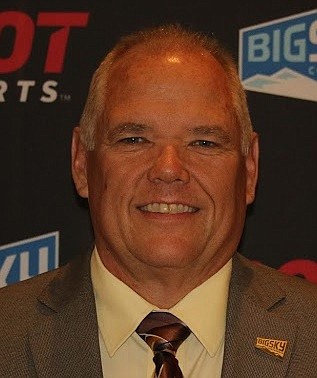
Roger Stewart is the IHSAA District 1 Football Commissioner. He has been an active on-field official for 32 years at the high school, NCAA, and professional levels. Anyone with the desire to explore becoming a sports official should start by inquiring with the North Idaho Officials’ Association (NIOA) at: [email protected]. Leave your contact information and what sports you are interested in. Someone will get back to you in short order.