
Learn from Down Under
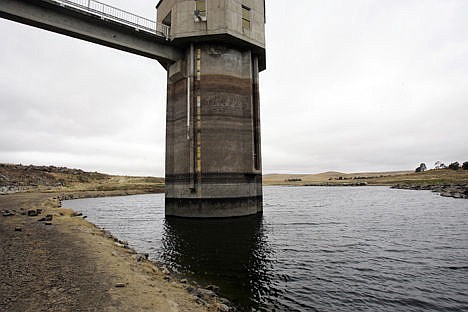
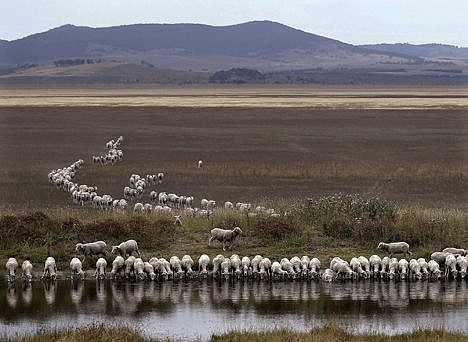
SYDNEY (AP) - California has turned to the world's driest inhabited continent for solutions to its longest and sharpest drought on record.
Australia, the land poet Dorothea Mackellar dubbed "a sunburnt country," suffered a torturous drought from the late 1990s through 2012. Now Californians are facing their own "Big Dry," and looking Down Under to see how it coped.
Australia also faced tough water restrictions - along with dying cattle, barren fields and monstrous wildfires that killed 173 people. But when the rains finally returned, Australians had fundamentally changed how they handle this precious resource. They treat water as a commodity to be conserved and traded, and carefully measure what's available and how it's being used. Efficiency programs cut their average daily use to 55 gallons, compared with 105 gallons per day for each Californian.
The lesson - long droughts are here to stay, so societies had better plan ahead, said drought-policy expert Linda Botterill of the University of Canberra.
"We can expect longer, deeper and more severe droughts in Australia, and I believe the same applies in the U.S.," Botterill says. "As a result, we need to develop strategies that are not knee-jerk responses, but that are planned risk-management strategies."
California water officials now routinely cite Australia's experience. Felicia Marcus, who runs California's Water Resources Control Board, can describe the stormwater-capture system watering soccer fields in Perth in minute detail.
But Californians may find Australia's medicine tough to swallow.
Australians are accustomed to living in a dry land, expect government intervention in a crisis and largely support making sacrifices for the common good. For much of their history, many Californians have enjoyed abundant water, or were able to divert enough of it to turn deserts green, and lawyers make sure property rights remain paramount.
From an Australian perspective, California's drought response has been "absolutely pathetic," said Daniel Connell, an environmental policy expert at The Australian National University.
Australia's drought response was hardly perfect, and some of its gains might be slipping away, but Americans suffering their own "Big Dry" may benefit from some comparisons:
Watching the flow
* Thousands of gauges across Australia measure rainfall, authorities in each state and territory measure surface water at stream gauging stations, and underground water is monitored through a complex process involving the drilling of bores and controlled pumping tests. Water data collection agencies report to the federal Bureau of Meteorology, which publishes the data online.
* The legislature last year required monitoring to be phased in gradually, eventually showing for the first time how much groundwater is being pumped. But roughly a quarter-million California households and businesses still lack water meters, and aren't required to have them until 2025. The state relies on an honor system: Rights holders self-report their use of river and stream water every three years. Gov. Jerry Brown's budget proposed last week would require monitors and annual usage reports.
Tightening the tap
* All major cities in Australia imposed limits or bans on watering lawns and washing cars, and inspectors fined rule-breakers. Public-service campaigns and water-saving appliances also reduced household water use from 85 gallons per person per day in 2000 to 55 gallons per person today.
* After voluntary cutbacks fell short, Brown's administration mandated a statewide 25 percent cut in water use by California cities and towns, and ordered more farmers to stop pumping from rivers and streams. Marcus said the one piece of advice that seemed universal in both Australia and California "was conserve, conserve, conserve, as early as you can, because it's the cheapest, most economical way to buy time" while tougher water-saving measures are enacted.
Do more with less
* Australians began conserving long before their drought. In 1995, Sydney's water authority was ordered to slash per-capita demand by 35 percent by 2011, and it met that target by reducing pressure and leaks in pipes, boosting businesses' water efficiency, and offering low-cost, water-saving technologies in homes, such as dual-flush toilets, low-flow showerheads and rainwater tanks for gardens, toilets and laundry. With government rebates, these devices became common across Australia.
* Communities across California offer rebates on drought-friendly plumbing and appliances, and a growing number of local ordinances are being rewritten to allow families to recycle water from rains and from showers. But the rooftop-rain collectors, stormwater cisterns and bathwater-recycling for gardens common in Australia remain rarities.
MIRACLES OF TECHNOLOGY
AUSTRALIA: Billions were spent on desalination plants in major cities, and many are not operating because cheaper water is now available in Australia, prompting critics to dismiss them as expensive and power-hungry flops that will create greenhouse gases and worsen the continent's climate-change woes. Supporters say the plants will protect the country from the next inevitable drought.
CALIFORNIA: Brown has called for conservation while focusing on an ambitious, $17 billion plan, opposed by environmental groups, to build 39 miles of tunnel to take Northern California water to Southern California's bigger farmers. Desalination plants also are envisioned: San Diego's would be the biggest in the Western Hemisphere.