
Pentagon Papers, 40 years later
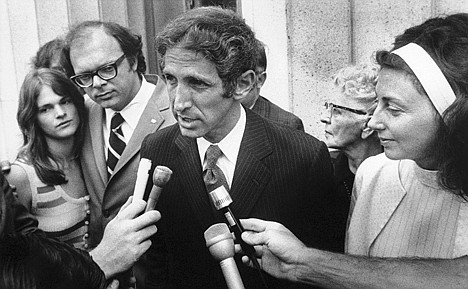
<p>In this July 11, 1972, file photo Daniel Ellsberg with his wife, Patricia, at right, talks to the press in Los Angeles during a recess in his trial as his co-defendant Anthony Russo, and his wife, Katherine, listen at left. The two were charged with the leak of top secret documents to news media. Forty years after the explosive leak of the Pentagon Papers, the secret government study chronicling deception and misadventure in U.S. conduct of the Vietnam War, the report is being released in its entirety Monday by the National Archives and presidential libraries.</p>
WASHINGTON (AP) - Call it the granddaddy of WikiLeaks. Four decades ago, a young defense analyst leaked a top-secret study packed with damaging revelations about America's conduct of the Vietnam War.
On Monday, that study, dubbed the Pentagon Papers, finally came out in complete form. It's a touchstone for whistleblowers everywhere and just the sort of leak that gives presidents fits to this day.
The documents show that almost from the opening lines, it was apparent that the authors knew they had produced a hornet's nest.
Asked by Defense Secretary Robert S. McNamara to do an "encyclopedic and objective" study of U.S. involvement in Vietnam from World War II to 1967, the team of three dozen analysts pored over a trove of Pentagon, CIA and State Department documents with "ant-like diligence," he wrote.
Their work revealed a pattern of deception by the Lyndon Johnson, John Kennedy and prior administrations as they secretly escalated the conflict while assuring the public that, in Johnson's words, the U.S. did not seek a wider war.
The National Archives released the Pentagon Papers in full Monday and put them online, long after most of the secrets spilled. The release was timed 40 years to the day after The New York Times published the first in its series of stories about the findings, on June 13, 1971, prompting President Richard Nixon to try to suppress publication and crush anyone in government who dared to spill confidences.
Prepared near the end of Johnson's term by Defense Department and private analysts, the report was leaked primarily by one of them, Daniel Ellsberg, in a brash act of defiance that stands as one of the most dramatic episodes of whistleblowing in U.S. history.
Ellsberg remains convinced the mammoth report would have had less impact if Nixon had not temporarily suppressed publication with a lower court order and had not prolonged the headlines even more by going after him so hard.
"Very few are going to read the whole thing," he said in an interview with the Associated Press, meaning both then and now. "That's why it was good to have the great drama of the injunction."
The declassified report includes 2,384 pages missing from what was regarded as the most complete version of the Pentagon Papers, published in 1971 by Democratic Sen. Mike Gravel of Alaska. But some of the material absent from that version has appeared elsewhere.
One volume missing from the Gravel edition and released Monday details U.S. miscues in training the Vietnamese National Army from 1954 to 1959. The U.S. sent more than $2 billion in aid to Vietnam then, nearly 80 percent for security.
In words that echo today's laments about money misspent in Iraq and Afghanistan, the report says the U.S. did not get much in return. "Very little has been accomplished," the volume says.